
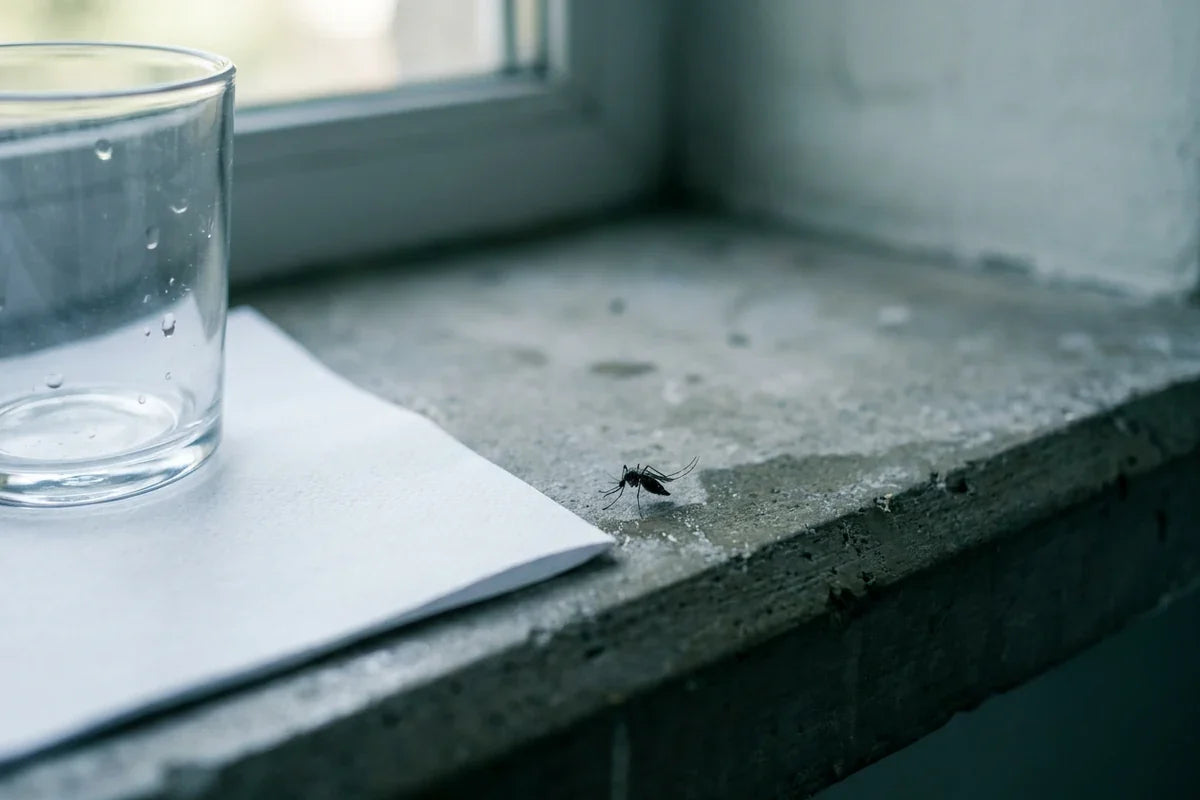
Close the room, wait for the mosquito to settle, then cover it with a clear cup and slide a stiff piece of paper underneath. If it disappears from view, check the cool, dim hiding places around the room before chasing it through the air.
Find the Mosquito’s Resting Spot
Start by shutting the door so the mosquito cannot move into another room. Check that nearby windows are closed or screened as well. You now have a defined search area, which is much easier to manage than an open hallway or an entire floor.
Look around the walls, ceiling, curtains, and the sides of large furniture. Then search the less obvious places. Mosquitoes commonly rest in cool, dark, humid areas such as closets, showers, beneath sinks, and behind or underneath furniture. The CDC’s overview of common indoor resting places gives you a useful search pattern when the mosquito seems to have vanished.
Move slowly and inspect one part of the room at a time. A frantic search often sends the mosquito away from the very surface where you could have caught it. If locating it is the main problem, our guide to finding a mosquito in a room covers that task in more detail.

Catch It Once It Lands
A wall, mirror, window, or cabinet door gives you the best working surface. Have your cup and paper ready before moving closer. A transparent cup helps you keep the mosquito in sight while you position it.
- Approach slowly. Keep the cup facing the surface and avoid waving your free hand near the mosquito.
- Place the cup directly over the mosquito in one controlled movement. Hold the rim firmly against the wall or other flat surface.
- Slide a postcard, thin cardboard, or another stiff sheet between the rim and the surface. Keep the cup pressed down while you work the paper underneath.
- Once the opening is covered, lift the cup and paper together. Keep them level so the mosquito remains enclosed.
- Take the covered cup outside for release, or keep it sealed until you can dispose of the mosquito without touching it.
If the mosquito lands somewhere that a cup cannot cover, such as a folded curtain or a narrow corner, a flyswatter or folded tissue may be more practical. Wait for a reachable landing place rather than striking repeatedly while it is flying. Your aim is one controlled attempt, not a long chase around the bedroom.
A mosquito that escapes into another part of the building changes the size of the job. Use our guide to catching a mosquito in the house when you need to search several rooms instead of one enclosed space.

Use a Backup Option When You Cannot Reach It
High ceilings, heavy furniture, and cluttered storage areas can put a resting mosquito beyond a cup or swatter. If this happens regularly, you may prefer to compare available trap options rather than waiting beside the wall each evening. A trap is also a more practical choice when you hear or see mosquitoes repeatedly but cannot stay in the room to watch for a landing.
An indoor insect spray or fogger is another option for mosquitoes in the air or in their resting areas. Apply only a product intended for indoor use, and follow its label exactly. The CDC’s indoor spraying instructions explain the difference between airborne products and sprays placed on resting surfaces.
Spraying deals with the mosquito that is already inside, but it does not close the route it used to enter. Once the immediate problem is handled, spend a few minutes on the doorway, window, or screen nearest the room.

Keep Another Mosquito Out of the Room
Inspect window and door screens for openings and repair any damage you find. Close exterior doors promptly instead of leaving them propped open. Air conditioning can also help you keep windows closed when it is available, reducing the number of open routes into the room.
If mosquitoes are appearing in several rooms, treat that as a home-wide control problem rather than repeating the cup method night after night. Our guide to getting rid of mosquitoes in the home takes you through the broader cleanup and prevention work.
You may also need to look beyond the room. For an outdoor trapping setup, outdoor suction-trap choices address mosquitoes seeking a host, while egg-laying mosquito trap choices focus on a different stage of mosquito activity. Choose the approach that fits where the ongoing problem is occurring rather than placing an outdoor solution in a bedroom.
Protect the Bed Until the Mosquito Is Gone
If you cannot catch the mosquito before bedtime, a mosquito net can protect the sleeping area when a screened room or air conditioning is unavailable. Tuck the net beneath the mattress and check it for holes or tears before getting into bed. Avoid sleeping directly against the fabric, since a mosquito may still bite through a hole where your skin touches the net.
The CDC’s mosquito net instructions cover correct placement. The net gives you a protected place to sleep while the room remains enclosed, so you can continue the search when the mosquito becomes visible again.
Frequently asked questions
Can a Mosquito Lay Eggs Indoors?
Yes. A mosquito that enters a home can begin laying eggs in indoor items that hold water, including vases and flowerpot saucers. Empty and scrub, cover, turn over, or discard water-holding items once a week to remove eggs and larvae.
Do I Have to Leave the Home When Using an Aerosol or Fogger?
Yes. People and pets must leave while an indoor fogger or aerosol is being used. Cover fish tanks and return only after the spray has dried, following every direction on the product label.
Should I Apply Extra Surface Spray If the Mosquito Survives?
No. Never apply more than the product label directs. Some surface sprays need to be reapplied, but the label determines how much to use and when another application is appropriate.
Does Catching One Mosquito Mean the Room Is Clear?
Catching the mosquito you saw resolves that immediate problem, but another mosquito could enter later. Continued sightings are a reason to check screens, doors, and indoor water-holding items rather than assuming the same mosquito escaped.
Share:
How to Catch a Mosquito in the House: Safe, Simple Steps
How to Find Mosquito in Room: Check These Hiding Places