
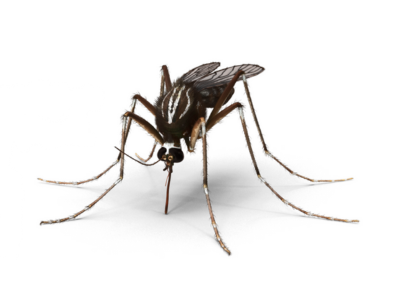
Dengue is the most common vector-borne viral disease in the world, causing an estimated 50–100 million infections and 25,000 deaths each year. Most cases occur in semitropical and tropical regions of the Americas, the Caribbean, Southeast Asia, Africa, and the Pacific.
History in the Americas
Historical epidemiologic and clinical reports describe the occurrence of dengue epidemics in larger U.S. cities, as far back as Colonial times. In 1780, a dengue-like outbreak was reported in Philadelphia, Pennsylvania, and in the 1820s, dengue outbreaks also occurred in Pensacola, Florida; Charleston, South Carolina; Savannah, Georgia; and New Orleans, Louisiana. The last major dengue outbreak, the “Galveston outbreak” of 1922, resulted in over 500,000 cases of dengue fever along the Gulf Coast.
The Ae. aegypti eradication program established by the Pan American Health Organization (PAHO) in the 1940s and 1950s to combat yellow fever was one of the most important factors in suppressing dengue in the Americas into the 1970s. Between 1948 and 1972, Ae. aegypti was eradicated in 21 of the countries of the Hemisphere. Unfortunately this program could not be sustained and by 1997, virtually all the countries of the Americas that had eradicated Ae. aegypti were reinfested, including the southern United States.
Dengue in the US today
In the US, a few scattered outbreaks of locally transmitted disease have occurred over the past 20 years in Texas, Florida and Hawaii, but by far, most reported cases are diagnosed in travelers returning from dengue endemic areas of the world. The potential for dengue to become established in the United States is increasing with the expansion of the ranges of its two main vectors: Ae. aegypti and Ae. albopictus. Changing demographics, increases in international travel to dengue endemic regions and changing climatic and ecological conditions that provide more suitable habitat for vectors all contribute to this increasing risk.
The disease
Dengue fever (DF) is caused by any of four closely related viruses, or serotypes: dengue 1–4. Infection with one serotype does not protect against the others, and sequential infections put people at greater risk for developing more severe forms of the disease, dengue hemorrhagic fever (DHF) and dengue shock syndrome (DSS).
According to CDC, signs and symptoms of dengue include: fever, headaches, muscle, bone and joint pain and pain behind the eyes. Many people, especially children and teens, may experience no signs or symptoms during a first case of dengue fever. A vaccine has recently become available, but is currently approved for use in only a limited number of countries.
Monitoring
Monitoring vector mosquito populations is critical to any local integrated vector management program. The goal of mosquito-based surveillance is to quantify human risk by determining the presence and abundance of local vector populations. Biogents mosquito traps, such as the BG-Sentinel, are very effective in monitoring populations of Ae. aegypti and Ae. albopictus in a local area. For more information on controlling vectors of Dengue virus see the CDC publication: Surveillance and Control of Aedes aegypti and Aedes albopictus >
Control mosquitoes without insecticides
For a persistent control, Biogents mosquito traps can help to reduce the local mosquito population on a long-term basis. For outdoor use: BG-Mosquitaire, BG-GAT, or BG-Mosquitaire CO2. With the BG-Home for indoors you can complement the control system. Further measures: elimination of breeding sites.
See All Traps →
Share:
Mosquito Control
Chikungunya