
Where you live affects what you're dealing with, and it's the reason someone else's setup wouldn't work for you. A property backing onto woodland has a different problem from a small enclosed lot with a blocked gutter, and if you're in an apartment overlooking a vacant lot, the water breeding them isn't even yours to empty. So work out what you've got before you buy anything to deal with it.
Look at the space you actually have and find where they're breeding, where they're sitting out the day, and how they're getting to you. This piece is about doing that, and about what the answers tell you.
Diagnose Yard Conditions Before Choosing Equipment
Start with two questions you can answer from memory. Where are you actually getting bitten, and where does water sit after it rains? Add a third if you have plants in pots, indoors or out, because the saucers underneath them hold water for days and almost nobody empties them. Mosquitoes avoid open sunny lawn and stay in the damp shaded pockets, so the distance between those pockets and where you sit is the problem you're solving.
Then look at where they're resting. Dense shrubbery, ivy beds, hedges that haven't been cut back, the crawlspace under the house, the gap behind the shed. Those hold humidity and keep the wind off, which is what mosquitoes need to get through the middle of the day without drying out. Note where they are, because that's where a trap should go rather than where you'd find it convenient. On a balcony or a small paved yard there might be nowhere like that at all, in which case they're coming from somewhere nearby rather than living with you.
Two more things while you're out there. Notice where the wind moves through, because a steady breeze thins out the scent coming off a trap and makes it hard work for a mosquito to fly into the intake. And check where your outdoor power outlets actually are, since the trap needs to run continuously in a spot that's often the far corner of the yard, and that's a problem to know about before you buy rather than after.
One thing to rule out while you're planning. The CDC doesn't recommend automated misting systems, and our guide to residential mosquito spraying goes through why.

Four Steps to Establish Effective Yard Control
If you found standing water, that's the first thing to deal with, and emptying, scrubbing, turning over, covering or discarding anything holding water once a week handles most of it. Put screens on rain barrels with a mesh finer than a mosquito. For water you can't drain, a mosquito larvicide is the answer, which the next section covers.
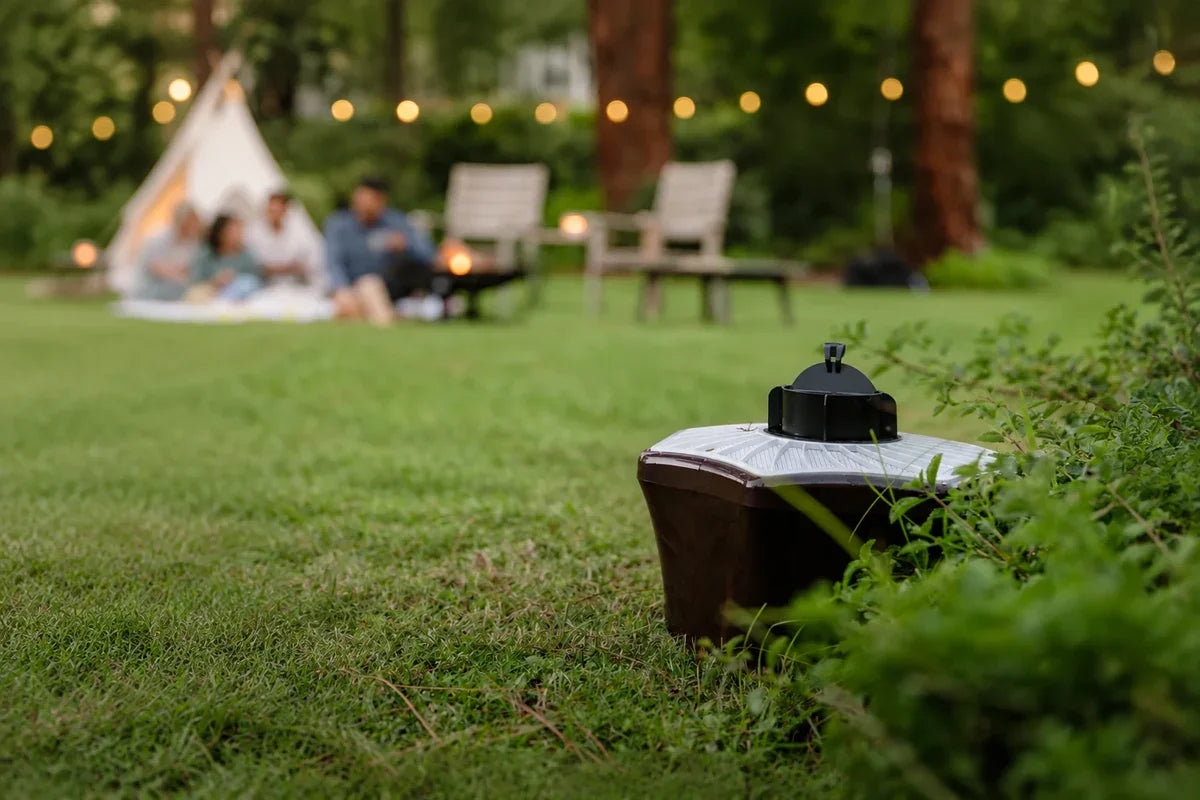
If you found resting spots, that's where the trap goes. Put a Mosquitaire in the damp shade near the low branches, bushes or groundcover where mosquitoes are sheltering, and at least fifteen feet from where you sit.
If you found both, or you're near woodland, add to it. A GAT in a quiet shaded spot near drainage catches the mosquitoes hunting for somewhere to lay eggs. And if you back onto woods or you're dealing with heavy tiger mosquito pressure, adding CO2 imitates breathing and widens what the trap catches. Our guide to residential mosquito treatment covers trap placement and water management in more detail.

Target Larvae in Permanent Water Reservoirs
Some water stays whatever you do. French drains, a decorative pond, a birdbath you want to keep, a ditch along the property line that holds rainwater all summer. For those, a larvicide in the water kills the larvae before they reach the biting stage. The usual one is Bti, which is a naturally occurring soil bacterium rather than a pesticide, and it's sold as briquets, granules, tablets or liquid depending on what you're treating. Check the label before you treat water that animals drink from.
Gutters are the ones people forget, because the water isn't at ground level where you're looking for it. Decomposed leaves hold moisture in a blocked downspout for weeks, and a corrugated extension can sit half full all season. Check them monthly rather than annually.
If you're bringing in a service as well, your walk around the property is still useful, because you can tell them where you're getting bitten and where things are resting. Ask what they'd recommend given that, and check what you're paying for, since some contractors charge the same whether they spot-treat the resting places or cover the whole lot. Our guide to residential mosquito spraying covers what a treatment involves and what it costs.

Track Weekly Catch Trends and System Maintenance
Judge it over weeks rather than evenings. One quiet night tells you nothing, and neither does one bad one, so what you're looking for is whether you're being bitten less this month than last. You'll see mosquito numbers rise and fall with the weather from one week to the next, which makes a single evening a poor sample.
The upkeep is light. Empty the catch bag every week or two depending on how many mosquitoes you're catching, clear leaves and cobwebs out of the intake, and trim back anything that's grown across the opening. Replace the scent lure every two months, and if you're running CO2, check the cylinder pressure while you're there. Unplug the trap at the outlet before you handle any of it, especially after rain.
If the biting goes up while the catch goes down, move the trap six to ten feet further into the planting rather than buying another one. Mosquitoes shift where they rest as the season changes and the planting grows in, so the spot that worked in June isn't always the spot that works in August. Change one thing at a time and give it a week, because if you move it and change the lure and trim the hedge all in the same afternoon, you won't know which of them did the work.
Frequently asked questions
What if Mosquitoes Keep Getting Inside the House?
Check the screens and the gaps around doors first, then look for water indoors, because the saucer under a houseplant breeds mosquitoes as well as anything outside does. If they're still getting in, look at where they're coming through, which is usually a covered patio, a garage or a screened porch. The Home trap is made for those spaces, and it works best somewhere that isn't air conditioned.
How Do I Handle an Unreliable Power Source?
Treat it as part of the setup rather than something to work around later. Check that the outlet works and that an outdoor-rated cord reaches the spot you picked, before you commit to that spot. If there's no power at all where the trap needs to be, a passive GAT needs none at all, since it works by imitating still water rather than by suction.
How Should I Troubleshoot Disappointing Catches After a Storm?
Unplug it at the outlet before you touch anything, since a storm means water and possibly a damaged cable. Then check that it's running again once you've plugged it back in, because a trap that's been off for days has an empty bag for reasons that have nothing to do with placement. Give it a week of normal running before you judge it, and remember that heavy rain refills every container you emptied, so mosquito numbers often climb in the days after a storm.
What Should I Do With Water That Cannot Be Drained?
Use a mosquito larvicide labeled for that kind of site and follow its directions. That kills the larvae before they reach the biting stage, while the trap catches the adult mosquitoes already flying, so running both covers the whole cycle rather than half of it.
Share:
Will Bleach Kill Mosquito Larvae? Safer Ways to Control Them
Residential Mosquito Spraying: What Works and What to Expect