
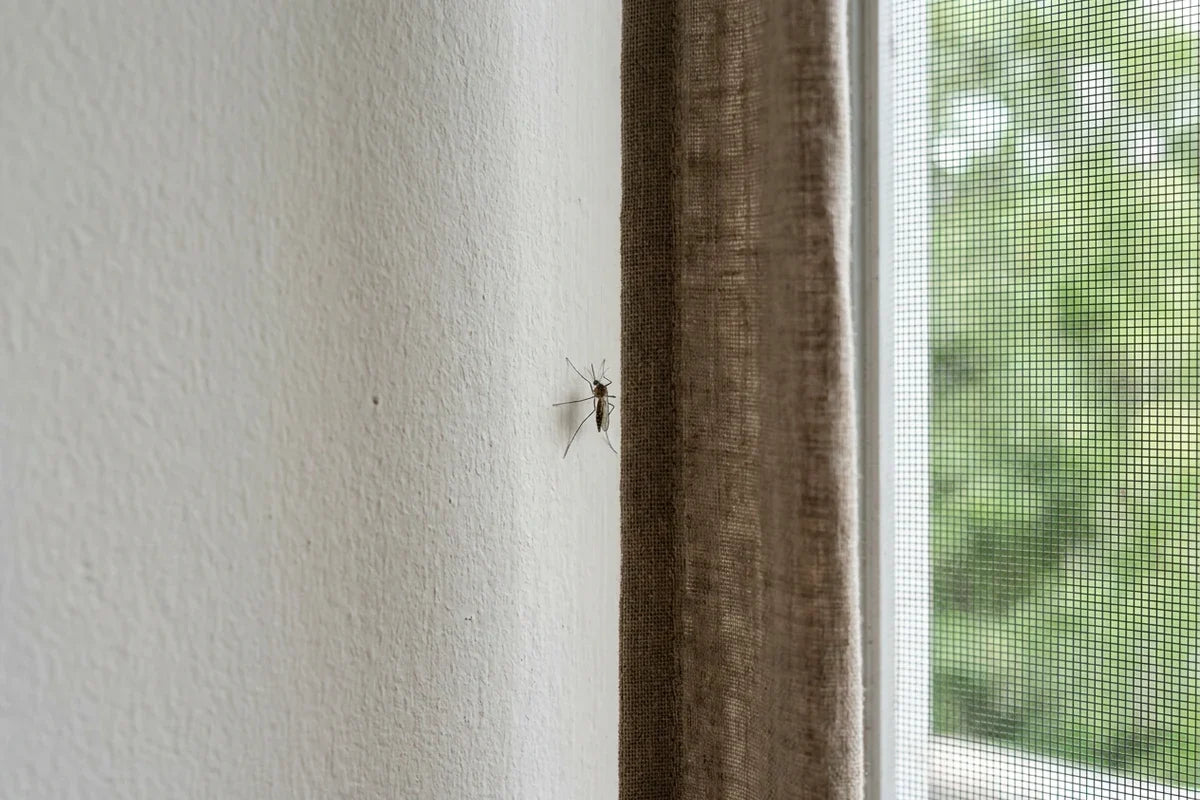
A mosquito in your room is best handled as a small indoor problem first. Keep it in one space, check the places where it may be resting, remove it when it lands, and then deal with the openings or standing water that could bring more mosquitoes inside.
Start With the Places Mosquitoes Rest
A mosquito that vanishes after buzzing past your ear probably hasn’t gone far. Mosquitoes can live indoors, and they commonly rest in cool, dark, humid parts of a home. That gives you a much better starting point than scanning the middle of the room.
- Check beneath and behind furniture. Look along the wall, the back of curtains, and the shaded space beneath a bed or desk.
- Inspect nearby humid areas. The underside of a sink, a shower, a laundry area, or an open closet may give the mosquito a sheltered place to rest.
- Pause between checks. A mosquito sitting on a dark surface is easy to miss when you’re moving quickly from one side of the room to the other.
- Expand into adjoining rooms only after checking the original room carefully. Closing connecting doors can keep a one-room search from turning into a tour of the whole house.
Work around the room in a consistent direction so you know which surfaces you have already covered. Pay particular attention where furniture, fabric, or plumbing creates a shaded pocket. If the mosquito takes flight, watch where it goes and begin again from that landing area instead of restarting the whole search.
If you keep losing sight of it, the complete guide to finding a mosquito in a room takes you through a more focused search. The useful shift is simple: stop following the sound alone and concentrate on the surfaces where the mosquito can settle.

Catch the Mosquito Without Chasing It Everywhere
Once the mosquito is confined to a room, give it a chance to land rather than swatting at it in flight. Keep your preferred catching tool nearby and watch the walls, curtains, furniture, and other resting surfaces you have already checked. A calm, methodical pass is easier to manage than repeatedly searching the entire room.
Choose a clear approach before it lands. If you plan to swat it, avoid letting furniture block your movement. If you intend to capture it in a container, have the container and a stiff piece of paper ready. Preparing first reduces the chance that you will lose the mosquito while looking for what you need.
The right approach may depend on whether you can see the mosquito clearly and how much furniture is in the way. Use the step-by-step guide to catching a mosquito in a room for room-specific options. If it has escaped into a hallway or another part of the home, switch to the broader guide to catching a mosquito in the house.
Stop More Mosquitoes From Entering
Finding one mosquito doesn’t tell you how it entered, so check the room itself before treating the problem as finished. A torn screen or a door left open can undo the work you just did. These checks also matter when mosquitoes keep appearing in the same room.
- Repair gaps or tears in window and door screens, and use the screens whenever the windows are open.
- Keep exterior doors closed instead of leaving them propped open, including doors between the home and garage.
- Use air conditioning when possible so windows and doors do not need to remain open for ventilation.
- Check indoor containers that hold water, especially flower vases and plant saucers. Once a week, empty and scrub, cover, turn over, or discard suitable items.
In a rented home, damaged screens or doors may require help from the property owner or manager. Report the exact opening and the room it affects rather than relying on a temporary gap around the frame. In a shared building, keep your own doors and windows secure while management handles openings in common areas.
Standing water deserves attention even when the container looks harmless. Mosquitoes can lay eggs in water-holding items indoors, so pouring out the water without scrubbing the container may leave part of the problem behind. Our complete guide to getting rid of a mosquito in a room covers the removal process in more detail.

Protect Yourself While the Mosquito Is Still Loose
If you can’t catch the mosquito immediately, an EPA-registered insect repellent can help prevent bites while you continue looking. Apply it according to the product label. This is especially practical when the mosquito disappears near bedtime and you cannot finish searching the room right away.
Indoor insecticide is another option after you have repaired screens and addressed water-holding containers. Foggers and aerosols require people and pets to leave the home during use, while surface sprays are applied to places where mosquitoes rest. Cover fish tanks and follow every instruction for application, drying, and reentry on the label. The CDC’s indoor spraying information explains those distinctions.

Look Outdoors When the Problem Keeps Returning
One stray mosquito calls for an indoor search. Mosquitoes appearing in several rooms or returning after screens and indoor water have been addressed point to a wider mosquito-control job around the property. That is where outdoor trapping options for the property become more relevant than repeatedly treating a bedroom or living room.
Keep that change in scale clear. An outdoor system is not a substitute for catching the mosquito currently inside, and an indoor search does not address ongoing activity around the home. Handle the immediate visitor in the room, then consider outdoor trapping when new mosquitoes continue to arrive.
Biogents recommends catching mosquitoes outdoors before they enter the house. A suction trap for biting mosquitoes is designed for outdoor use and targets mosquitoes seeking a host. For a broader mix of mosquitoes, carbon-dioxide-enhanced setups add carbon dioxide, an attractant for blood-feeding mosquitoes.
Biting mosquitoes are only one part of an outdoor population. Egg-laying females seek suitable water after feeding, so traps aimed at that breeding stage can complement a system focused on host-seeking mosquitoes. The choice belongs outside the room and should match the mosquito activity around your yard, patio, or other outdoor space.
Frequently asked questions
Can a Mosquito Keep Living Inside My Home?
Yes. Mosquitoes can live indoors and may rest in sheltered areas such as closets, laundry rooms, showers, and spaces behind furniture.
Does Everyone Need to Leave When an Indoor Fogger Is Used?
Yes. People and pets must leave the home when foggers or aerosols are used. Cover fish tanks and follow the label for application and safe reentry.
Which Repellent Ingredients Can Help Prevent Mosquito Bites?
CDC lists EPA-registered repellents containing active ingredients such as DEET, picaridin, IR3535, oil of lemon eucalyptus, para-menthane-diol, and 2-undecanone. Always follow the product label.
Will Indoor Insecticide Alone Keep the Room Mosquito-Free?
No. Indoor insecticide may work quickly and may require reapplication, but it does not replace repairing screens, preventing entry, and removing indoor water where mosquitoes could lay eggs.
Share:
Mosquito in House: Where It Hides and How to Keep It Out
Mosquito Larvae in Water: Remove Them and Prevent More