
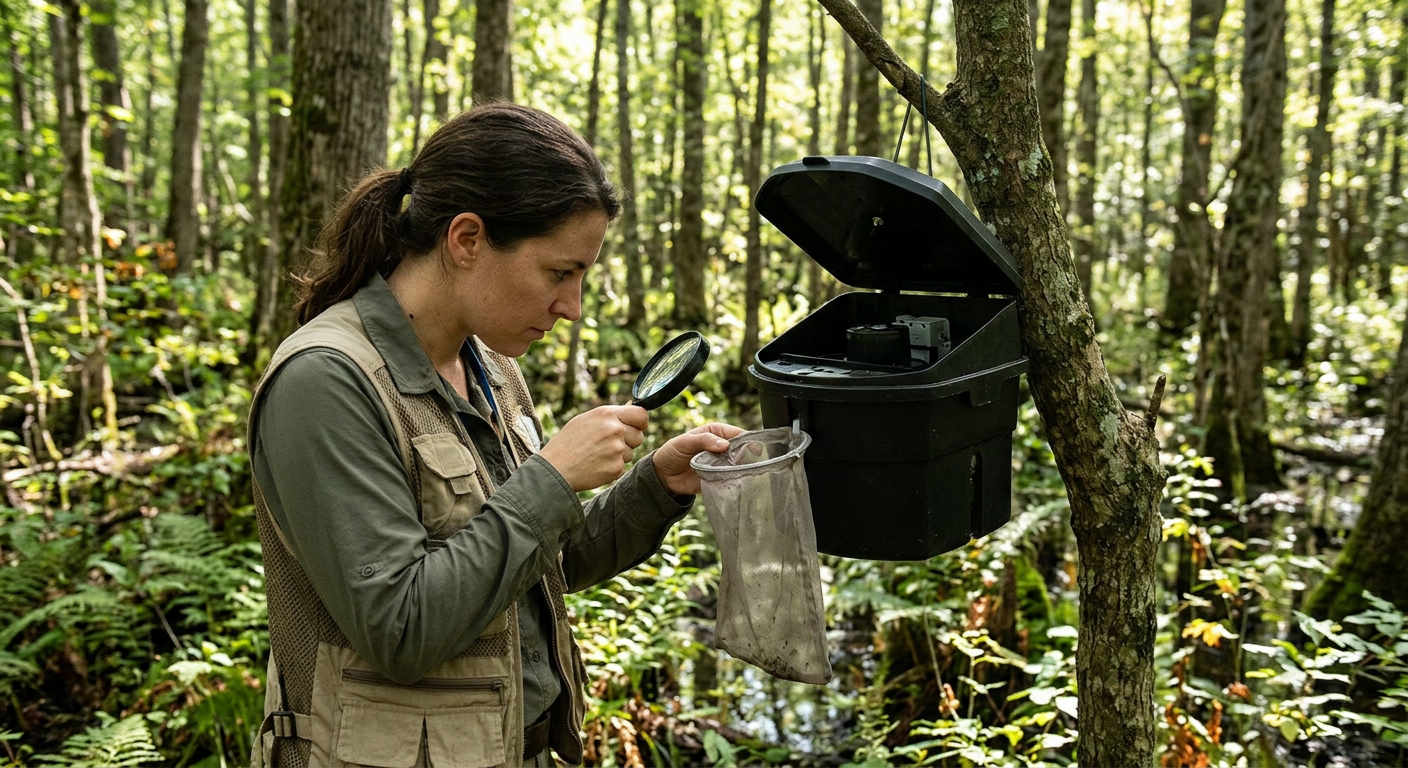
Eastern equine encephalitis virus (EEEV) was first identified in 1938, when 30 children died of encephalitis in the northeastern United States during an outbreak in horses in the same region.
Transmission cycle
The EEE virus is capable of infecting mammals, birds, reptiles, and amphibians, but is maintained primarily in a cycle between Culiseta melanura mosquitoes and avian hosts in freshwater hardwood swamps. Transmission of the EEEV to mammals occurs via other mosquitoes (bridge vectors) that bring the virus from avian populations to mammalian populations.
Important bridge vectors include: Coquillettidia perturbans, Aedes canadensis, Ae. sollicitans and Ae. vexans.
Horses are susceptible to EEEV infection and some cases are fatal. EEEV infections in horses, however, are not a significant risk factor for human infection because horses (like humans) are considered to be dead-end hosts for the virus as levels of virus found in the blood are insufficient to infect mosquitoes.
US cases
In the United States, an average of 8 human cases of EEE are reported annually. Over the past decade, most cases of EEE have been reported from Massachusetts, Florida, New Hampshire, and North Carolina and are often associated with freshwater hardwood swamps.
 Eastern equine encephalitis virus neuroinvasive disease cases reported by state, 2004–2013
Source: ArboNET, Arboviral Disease Branch, CDC. Counties are shaded according to incidences ranging from less than 0.20, 0.20 to 0.49, and greater than 0.50 per 100,000 population. Shaded counties are primarily distributed along the Gulf Coast, Eastern seaboard, and the Great Lakes.
Eastern equine encephalitis virus neuroinvasive disease cases reported by state, 2004–2013
Source: ArboNET, Arboviral Disease Branch, CDC. Counties are shaded according to incidences ranging from less than 0.20, 0.20 to 0.49, and greater than 0.50 per 100,000 population. Shaded counties are primarily distributed along the Gulf Coast, Eastern seaboard, and the Great Lakes.
Risk factors and symptoms
People who engage in outdoor work and recreational activities in endemic areas are at increased risk of infection. According to CDC, persons over age 50 and under age 15 seem to be at greatest risk for developing serious symptoms when infected with EEEV.
Overall, only about 4–5% of human EEEV infections result in severe disease with encephalitis and approximately one third of all people with encephalitis die from the disease. Death usually occurs 2 to 10 days after onset of symptoms but can occur much later. Of those who recover, many are left with disabling and progressive mental and physical sequelae, which can range from minimal brain dysfunction to severe intellectual impairment, personality disorders, seizures, paralysis, and cranial nerve dysfunction. Many patients with severe sequelae die within a few years.
There is no approved human vaccine or specific antiviral treatment for EEE. A veterinary vaccine is available for horses and is recommended in endemic areas. Prevention relies on personal protective measures and mosquito control.
Control mosquitoes without insecticides
For a persistent control, Biogents mosquito traps can help to reduce the local mosquito population on a long-term basis. For outdoor use: BG-Mosquitaire, BG-GAT, or BG-Mosquitaire CO2. With the BG-Home for indoors you can complement the control system. Further measures: elimination of breeding sites.
See All Traps →
Share:
Malaria
Yellow Fever Mosquitoes (Aedes aegypti)