
| Annual infections | Estimated 228 million people (2018) |
| Annual deaths | 405,000 (2018) |
| Distribution | Subtropics and tropics |
Introduction
Malaria is not caused by a virus or a bacterium, but by protozoan blood parasites in the genus Plasmodium. The European Centre for Disease Prevention and Control (ECDC) lists four species from the genus Plasmodium that are responsible for malaria in humans: Plasmodium falciparum, Plasmodium vivax, Plasmodium ovale and Plasmodium malariae. The WHO and CDC list one more pathogen, Plasmodium knowlesi, which most often causes malaria in macaque monkeys but occasionally also in humans.
Of the 5 types of human malaria, P. falciparum and P. vivax are responsible for almost 95% of all infections worldwide. Malaria is one of the three most common infectious diseases, together with HIV/AIDS and tuberculosis. It is the only one of these three diseases that is transmitted by mosquitoes (mosquitoes of the genus Anopheles).
Between 200 and 250 million people become infected with the disease every year. The WHO estimates that 405,000 died from malaria in 2018. According to the 2019 WHO World Malaria Report, 50% of global cases (about 228 million) were attributable to only 6 countries: Nigeria (25%), the Democratic Republic of the Congo (12%), Uganda (5%) as well as Côte d’Ivoire, Mozambique and Niger with 4% each. About 67% of the deaths were children. While the WHO Africa region accounts for 93% of all reported cases and 94% of all deaths, Plasmodium parasites are found today in about 91 countries in the world.
The transmission route of malaria
Malaria is caused by protozoan parasites of the genus Plasmodium and are transmitted by Anopheles mosquitoes. The transmission cycle:
- Humans become infected through the bite of an infected Anopheles mosquito. During the feeding process, infectious sporozoites are released from the mosquito’s salivary glands and enter the bloodstream.
- Sporozoites make their way to the liver where they invade liver cells. Within the liver cells the parasite multiplies and transforms to a stage called merozoites.
- Infected cells eventually rupture releasing merozoites into the blood where they enter red blood cells. In the red blood cells, the parasites grow, eventually destroying the blood cells and the cycle of invasion and destruction continues.
- Reproductive stages of the parasite, male and female gametocytes, occur in some blood cells. When ingested by a biting mosquito, they mate in the gut of the mosquito forming an oocyst. Within the oocyst, sporozoites develop and eventually make their way to the salivary glands where the whole cycle repeats.

According to current knowledge, human Plasmodium parasites are transmitted exclusively by mosquitoes (Culicidae) of the genus Anopheles. Currently, 493 species are ascribed to the genus Anopheles, but not all of them can transmit the pathogen. According to the ECDC, about 60 to 100 Anopheles mosquito species are capable of spreading the pathogen. According to the CDC, only about 30 to 40 species are routinely associated with actual transmission in the wild.
 Distribution map of malaria
Source: World Malaria Report 2019
Distribution map of malaria
Source: World Malaria Report 2019
The disease
While there is no typical course of malaria, commonly a patient will report a combination of the symptoms below:
The most common, but also the most severe form of the disease is caused by P. falciparum. The incubation period is between 7 to 15 days after infection. In severe cases, symptoms related to organ failure may develop, such as acute renal failure, pulmonary edema and circulatory collapse. Cerebral malaria can occur when the disease attacks the central nervous system and the brain causing seizures, clouding of consciousness, coma and potentially, death. Falciparum malaria may be fatal if treatment is delayed beyond 24 hours after the onset of clinical symptoms.
The second most common form of the disease is caused by P. vivax. The incubation period is about 12 to 18 days. After the initially general and unspecific symptoms, a typical alternating fever sets in and every 48 hours, the patient experiences violent fever spikes lasting 3 to 4 hours. The body temperature can rise extremely quickly to around 40°C and then fall again just as quickly. The disease is well treatable today and is very rarely fatal.
Malaria caused by P. ovale and P. malariae are much less common and also easily treatable. A fifth species that can occasionally infect humans is P. knowlesi, which is usually associated with monkeys.
Brief history of malaria
Malaria has been around for as long as humans have existed. The first written records of the disease can be found in Chinese documents as early as 2700 BC, in 2000 BC on Mesopotamian clay tablets or in 1570 BC on Egyptian papyrus. Almost 700 years later, an ancient Indian text even calls it the “king of diseases”. Malaria is mentioned in Homer’s Iliad in 850 BC as well as in the natural philosophy texts of Hippocrates around 400 BC. Although the exact circumstances of his death are unclear, malaria is often discussed as a contributing factor in the death of Alexander the Great in Babylon at the age of 32.
Around 1900, the pathogen had its largest distribution worldwide and was found in the tropics, subtropics and temperate latitudes of all continents, from Sweden, Russia and the USA in the north to Argentina, South Africa and Australia in the south.
North America
It was not until the 1930s that the USA began to take targeted, large-scale action against malaria. One of these measures was the foundation of the Office of National Defense Malaria Control Activities, today’s CDC, in 1946. Since 1951, malaria has been considered as eradicated in North America. However, every year, the CDC registers between 1,500 to 2,000 cases of malaria in the US, about 5 of which are fatal. These infections are acquired, almost exclusively, during a visit to countries where the disease is endemic.
Europe
Due to strict public health measures instituted in the 20th century, it is extremely unlikely to get malaria in Europe today. In 2018, the ECDC registered 8,349 cases, with most being travel related. However, 14 cases were autochthonous (locally acquired). In Greece, multiple small outbreaks of malaria have been documented since 2009 with about a dozen locally transmitted cases per year.
What can you do to protect yourself?
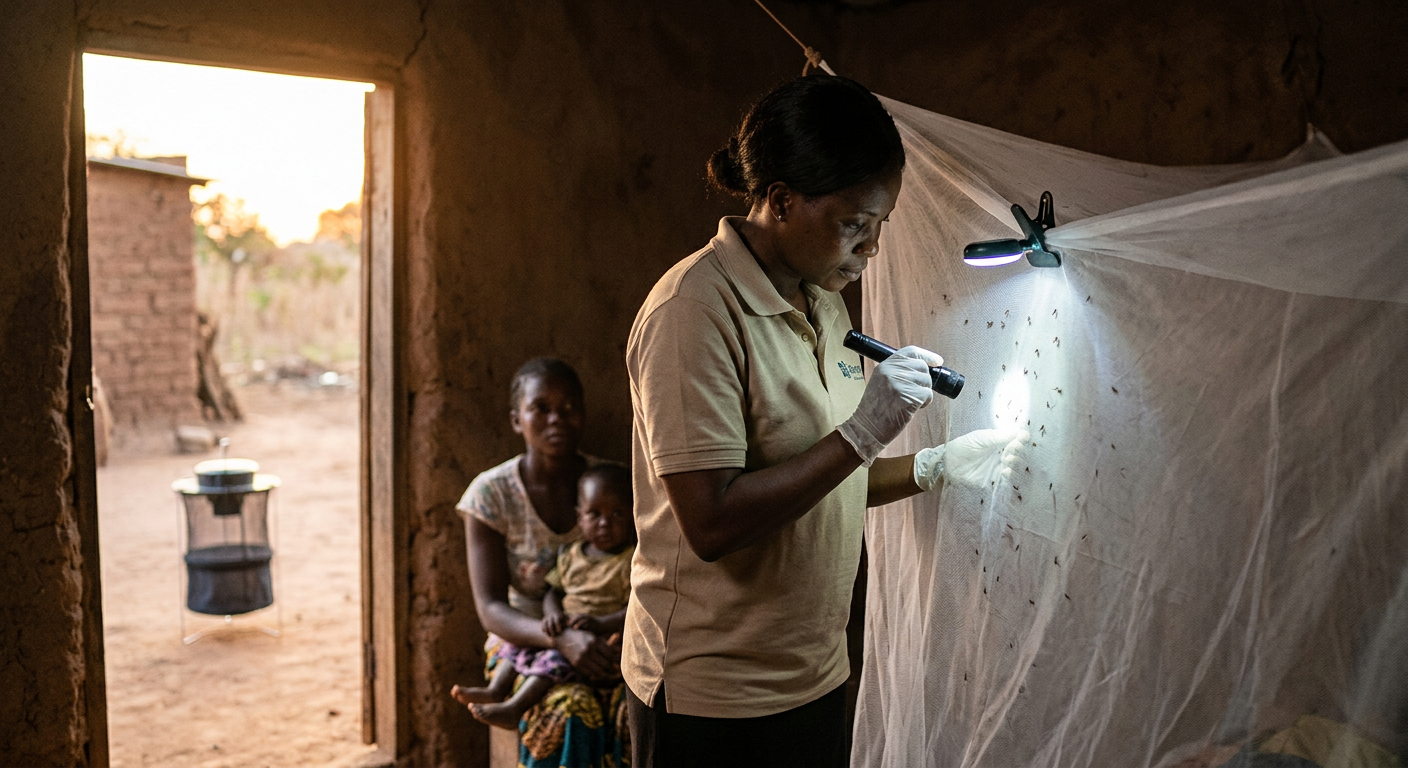
If you are travelling in an endemic area, you should always make sure that you are well protected against mosquito bites. It is best to have an insect spray with you that contains the proven active ingredients such as DEET, Picaridin or oil of lemon eucalyptus. However, since it is not always possible to be one hundred percent sure that a mosquito won’t bite you, you should talk to your family doctor about chemoprophylaxis in malaria areas. These are drugs that protect you from infection by the parasite in case of a bite. In your local accommodations, you should look for nets on the doors and windows and over the bed.
If you want to protect yourself at home against mosquitoes and the diseases they transmit, effective and long-term measures are available with traps such as the BG-Mosquitaire CO2.
Sources:
1) ECDC: ecdc.europa.eu/en/malaria | 2) CDC: cdc.gov/malaria | 4) WHO: who.int/malaria | 7) Malaria Atlas Project: malariaatlas.org
Control mosquitoes without insecticides
For a persistent control, Biogents mosquito traps can help to reduce the local mosquito population on a long-term basis. For outdoor use: BG-Mosquitaire, BG-GAT, or BG-Mosquitaire CO2. With the BG-Home for indoors you can complement the control system. Further measures: elimination of breeding sites.
See All Traps →
Share:
Eastern Equine Encephalitis (EEE)
Yellow Fever Mosquitoes (Aedes aegypti)