
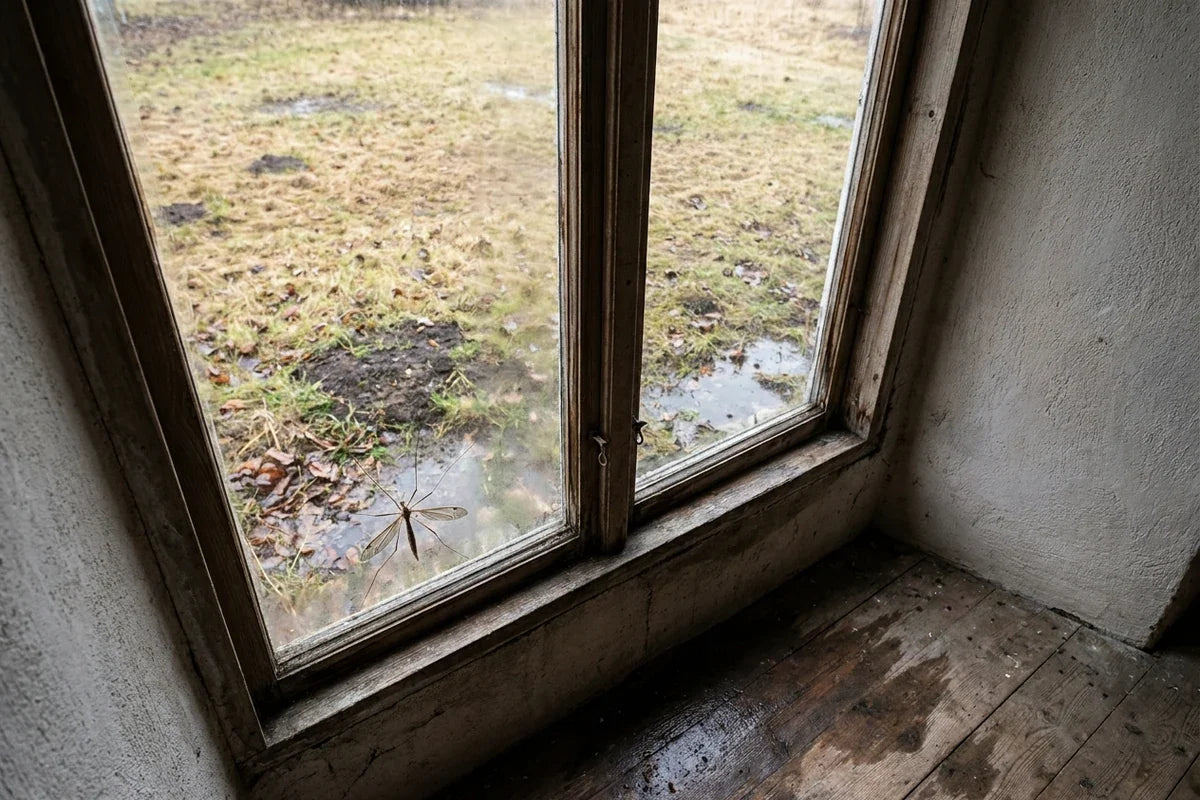
Mosquito hawks are usually crane flies, and the flying adults are harmless. They don’t bite or sting, so getting rid of them usually means reducing the lights that draw them toward doors and windows, then letting their brief adult season pass. If your lawn has thinning or dying patches, the problem may be crane fly larvae in the soil instead, and that calls for lawn care rather than treating the adults.
Make Sure You’re Solving the Right Problem
A mosquito hawk may look like an oversized mosquito, but it isn’t a mosquito or a reliable form of mosquito control. Adult crane flies are medically harmless and commonly become a nuisance when they gather near lights at night. Their long legs and narrow bodies can look alarming indoors, but their presence doesn’t mean you have giant biting mosquitoes.
Common names make this more confusing than it needs to be. “Mosquito hawk,” “mosquito eater,” and “mosquito killer” are often applied to the same gangly fly. Our guide to getting rid of mosquito eaters covers that naming overlap in more detail.
Where you see the insects tells you which response makes sense. Adults around walls, windows, lights, and doors are usually a temporary annoyance. Damaged grass in damp parts of the lawn can point to larvae below the surface. Actual mosquitoes create a separate biting and breeding problem, so mosquito traps won’t serve as a treatment for adult crane flies.

Reduce Adult Crane Flies Around the House
Start with nighttime lighting. Turn off outdoor lights you don’t need, particularly those close to doors and windows. When an entrance needs to stay illuminated, reduce the amount of time the light remains on. This makes the area less attractive during the hours when adult crane flies are active around lights.
Don’t spray the outside of the house simply because several adults have appeared. Adult crane flies live above ground for a short period and focus on reproduction rather than damaging your home or feeding on your lawn. A cluster near a porch light can look like an infestation even when the insects will soon disappear on their own.
Indoor appearances are often tied to that same attraction to light. Reducing unnecessary illumination around entry points addresses the draw without broadcasting an insecticide around the property. If the insects aren’t biting and the lawn looks healthy, there’s little reason to turn a passing nuisance into a chemical treatment project.

Check the Lawn When Grass Is Thinning
The damaging stage is the crane fly larva, commonly called a leatherjacket. These larvae can feed on grass roots, crowns, shoots, and portions above the soil. Damage may appear as thinning or dying grass, particularly in wet areas. They live in the thatch and upper soil, not in buckets or other standing-water containers like mosquito larvae do.
That difference keeps two very different problems from getting mixed together. For insects developing in containers, see our guide to mosquito larvae in water. For suspected leatherjackets, inspect the soil under damaged turf instead.
Sample several affected spots rather than judging the entire lawn from one patch. Cut a 6-by-6-inch section about 1 to 2 inches deep, then examine the thatch and soil for larvae. Crane fly monitoring guidance cites treatment thresholds of 25 to 50 larvae per square foot, with action generally considered above 25 per square foot in well-maintained turf.
Begin with the conditions supporting the lawn. Improve drainage in places that stay chronically wet, reduce irrigation where appropriate, and remove excess thatch. Aerate compacted soil and reseed bare spots so the turf can recover. These steps address the damp, weak lawn conditions associated with damage without assuming every crane fly requires treatment.

Use Lawn Insecticides Only for Confirmed Damage
If sampling confirms a damaging number of larvae after lawn and moisture improvements, treatment timing matters. Crane fly lawn management recommendations place the most effective insecticide timing in winter, before visible damage develops. A spring application may come after much of the feeding damage has already occurred.
Read and follow the full product label, including state-specific requirements. Some active ingredients used for crane fly larvae can be toxic to bees or aquatic organisms. Keep bee-toxic applications away from blooming weeds and flowers where bees are foraging, and prevent spray or runoff from reaching water.
On rented, shared, or public property, report suspected turf damage to the person responsible for irrigation and pest treatment. They control the watering schedule and any pesticide decision, so give them the locations of the damaged patches rather than applying a product yourself.
Switch Strategies If the Insects Are Mosquitoes
If insects are biting people, the problem isn’t harmless adult crane flies. Move to mosquito-specific control instead. Our guide to getting rid of mosquitoes in your yard covers the broader property approach, while our guide to getting rid of mosquitoes outside focuses on outdoor nuisance.
Once you’ve confirmed mosquitoes, choose equipment for that problem rather than expecting a mosquito product to remove crane flies. You can compare available trapping options, view the Mosquitaire selection, or explore options for gravid females, meaning egg-carrying mosquitoes. Properties considering carbon dioxide can also review setups that use CO2. Keeping the insect and the control method matched prevents wasted effort while the real problem continues.
Frequently asked questions
Do Mosquito Hawks Eat Mosquitoes?
Crane flies generally don’t eat mosquitoes. Dragonflies are the insects more commonly associated with catching and eating mosquitoes.
Do Adult Crane Flies Eat Anything?
Adult crane flies generally don’t feed, although they may drink water. Their brief adult stage is primarily focused on reproduction.
Is Spring the Best Time to Spray for Crane Fly Larvae?
No. When a confirmed infestation requires insecticide, winter treatment is generally more effective because it occurs before visible lawn damage. By spring, much of the damage may already have happened.
Can Crane Fly Lawn Treatments Harm Bees or Aquatic Life?
Some active ingredients can affect bees and aquatic organisms. Don’t apply bee-toxic products where bees are foraging on blooming plants, and keep treatments and runoff away from water. Always follow the product label.
Share:
How to Get Rid of Mosquito Eaters Without Harming Your Lawn
How to Get Rid of Mosquito in House: Effective Steps