
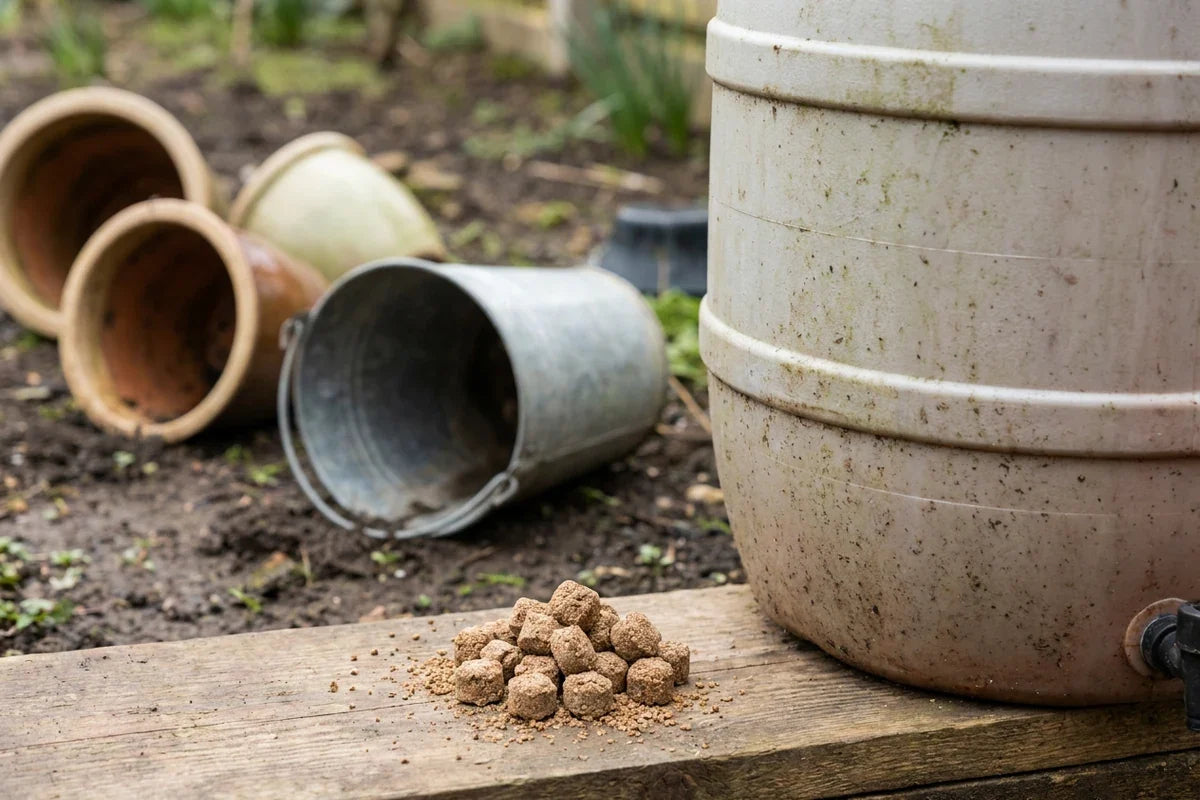
The most practical mosquito larvae killer for a home yard is an EPA-registered larvicide, usually a product containing Bti. Use it only for standing water you cannot empty, drain, cover, or turn over regularly. Removing the water remains the better first move because it takes away the breeding site instead of requiring continued treatment.
Remove Standing Water Before Treating It
Start with a slow walk around your property. Mosquitoes can lay eggs in ordinary objects that collect water, including buckets, rain barrels, clogged gutters, tires, and pool covers. Smaller containers are easy to miss, especially when they sit behind a shed, beneath a downspout, or among gardening supplies.
Once a week, empty, scrub, turn over, cover, or discard anything that holds water. The weekly routine recommended in the CDC’s mosquito-control steps prevents those containers from becoming dependable breeding sites. If you want help finding the likely trouble spots, use our guide to mosquito larvae in standing water.
Some water cannot simply be tipped out. A rain barrel may be needed for irrigation, while a low area or tree hole may continue collecting rain. That is where larvicide becomes useful. For the rest of the property, our complete guide to getting rid of mosquitoes in your yard puts water management into a broader control plan.

Choose a Larvicide Made for the Job
Look for an EPA-registered larvicide with a label that names the type of water you plan to treat. These products may be sold as dunks, tablets, briquettes, bits, pellets, granules, or liquids. The format changes how the product is measured and applied, so choose one that suits the container and follow its own directions rather than relying on a general rule.
A common active ingredient is <i>Bacillus thuringiensis</i> subspecies <i>israelensis</i> (Bti), a biological larvicide that mosquito larvae consume. Bti targets the larvae before they mature into biting adults. It is intended for water that cannot be emptied, covered, or turned over on a regular schedule.
When it is used according to the label, the CDC’s Bti fact sheet states that Bti does not harm people, pets, aquatic life, or other animals. That does not turn every Bti product into an all-purpose treatment. The label still controls where it may be used, how much to apply, and when another application is permitted.
| Situation | Best First Step | When to Use Larvicide |
|---|---|---|
| A bucket, plant saucer, or loose container | Empty it and scrub away residue | Only if the label permits treatment and the water cannot be removed |
| A rain barrel or other retained water | Cover it securely when possible | Use a labeled product if the water must remain exposed |
| A gutter or downspout holding water | Clear the obstruction | Treat only when drainage cannot be corrected and the label allows it |

Apply Mosquito Larvicide Correctly
More product is not a shortcut. An EPA-registered treatment is meant to be applied at the amount and interval printed on its label. Guessing based on the container’s appearance can result in using too much or treating again before the product directions allow it.
- Confirm that the water cannot reasonably be dumped, drained, covered, or turned over.
- Read the entire label and check that the treatment is approved for that type of standing water.
- Measure or portion the product exactly as directed for the amount of water being treated.
- Record the application date so you do not reapply sooner than the label instructs.
- Check the site after rain, overflow, or a change in water level, then follow the label rather than automatically adding more product.
Larvicides should be used in standing water that will not be used for drinking. The CDC’s homeowner larvicide guidance also warns against applying more than directed or repeating an application too often. If you need container-specific context, our guide to killing mosquito larvae in water covers that job in more detail.
Make Sure You Are Treating Larvae
Larvicide is useful only when the problem is actually developing in water. Before treating an unfamiliar container, take a close look at what is moving near the surface. Debris, reflections, and other small aquatic life can make a neglected bucket look more active than it is.
You do not need to identify the exact mosquito species to follow a product label, but you should distinguish larvae from unrelated material. Our guide to recognizing mosquito larvae in water explains the visible features without turning a simple yard check into a biology lesson.

Pair Larval Control With the Right Wider Strategy
Treating larvae addresses mosquitoes developing in water on the property you control. It does not remove biting adults that are already present or correct water collecting on neighboring, rented, or shared property. Ask the responsible owner or property manager to address water outside your control rather than applying a treatment there yourself.
For mosquitoes already flying around the yard, consider outdoor trapping options as a separate part of the setup. Depending on the trap you use, you may also need compatible scent lures. Another category focuses on females looking for breeding locations, so you can compare traps for egg-laying mosquitoes. Biogents’ mosquito-control approach consistently places breeding-site reduction alongside trapping rather than treating either step as the whole job.
This layered approach also helps you assign each tool a clear job. Remove disposable water, treat retained water according to the larvicide label, and use an appropriate trap category for adult mosquitoes. When each part of the yard is handled according to its actual condition, you avoid pouring larvicide into every wet container or expecting one treatment to solve a different life stage.
Frequently asked questions
Can I Put Mosquito Larvicide in Drinking Water?
No. Homeowner larvicides are intended for standing water that will not be used for drinking. Follow the product label for every permitted use.
Does Bti Harm Honeybees?
According to the CDC fact sheet, Bti does not harm honeybees when it is used as directed.
Does Bti Also Affect Black Fly or Fungus Gnat Larvae?
Yes. Bti targets mosquito, black fly, and fungus gnat larvae when they consume it.
Will Bti Kill Mosquito Pupae?
Bti targets larvae, so it may not be sufficient once pupae are present. Oils and films are the effective treatments identified for pupae, and they are generally applied by licensed mosquito-control professionals.
Share:
Mosquito Larvae in Water: Remove Them and Prevent More
Plants to Get Rid of Mosquito: What to Plant Instead