
When mosquitoes take over your yard, you want them gone without coating your living space in synthetic chemicals. Many popular DIY solutions promise an effortless fix, but relying on backyard folklore often leaves you with itchy ankles and endless frustration. Understanding mosquito biology helps you separate helpful habits from wishful thinking.
Your best approach will be a layered one. You start by getting rid of standing water, since that's where the larvae are. You protect yourself with repellents that have real testing behind them. And you catch the adults that are already flying with a trap that runs continuously. None of those three steps puts anything near your children, your pets, or the pollinators in your yard.
Understanding How Mosquitoes Choose Targets
Biting mosquitoes find you in stages. From a distance it's the carbon dioxide in your breath, which they can pick up from a long way off. As they get closer, body heat, the moisture coming off your skin, and your skin's own smell take over and guide them in.
Sight comes into it too. Dark clothing and shaded corners of the yard stand out against a lighter background, which gives them something to aim at. That's the problem with a single scented plant or a candle on the table. It can help a little, for a while, but you're giving off carbon dioxide, heat, moisture, skin scent and a dark outline all at once, and that's the exact combination mosquitoes have evolved to find. A bit of citronella in the air nearby doesn't change how tempting you are.

Evaluating Popular Botanical and DIY Remedies
Kitchen remedies are the usual starting point, whether that's garlic, an essential oil spray, or a citronella candle. Smoke and scented candles do something, in that they make it harder for a mosquito to pick you out of the air immediately around them. The catch is that a light evening breeze scatters the vapor, and the effect goes with it.
If you're putting something on your skin, you want an EPA-registered repellent with oil of lemon eucalyptus or PMD in it, which is the refined active ingredient from that oil. Those have been tested and they work. What you don't want is the raw essential oil from a health food shop, which has no testing behind it for safety or effectiveness, can irritate your skin, and evaporates fast in the heat.
If you have animals in the house, check before you use any of it. A lot of the popular essential oils for repelling mosquitoes are toxic to pets, whether it gets licked off your skin, absorbed on contact, or breathed in from a diffuser. Dogs and cats are the ones people know about, but birds, fish and reptiles tend to be more sensitive rather than less, and that goes double for anything exotic. Your vet will tell you quickly what's safe to have around yours.
How long you're protected comes down to the concentration on the label. If you're using something under 10% active ingredient, expect one to two hours, not an evening. Heat, sweat and swimming all cut that down further, so if you're out in the yard all afternoon you'll be reapplying rather than putting it on once.
Some of the most widely shared remedies do nothing at all, so it's better to know before you rely on one for an evening.
Eating raw garlic won't change how you smell to a mosquito, and nor will vitamin B supplements. A repellent wristband protects the strip of skin underneath it and nothing else, which is no use when you're being bitten on the ankles. And the ultrasonic apps and plug-ins have been tested repeatedly and don't repel biting insects.

A Four-Step Insecticide-Free Yard Strategy
So what does work. Three things, and none of them is a scent.
Get rid of standing water every week, because that's where the next generation is coming from, and treat anything you can't drain with a Bti larvicide. Fix your screens and wear loose long sleeves and pants for yard work. Then catch the adults that are already flying, with a Mosquitaire for the ones hunting you and a GAT for the ones hunting for water to lay eggs in.
Our practical yard plan sets out what to do weekly, monthly and once a season, and the natural mosquito killer guide goes deeper on the larval side.
Trap Placement, Maintenance, and Realistic Expectations
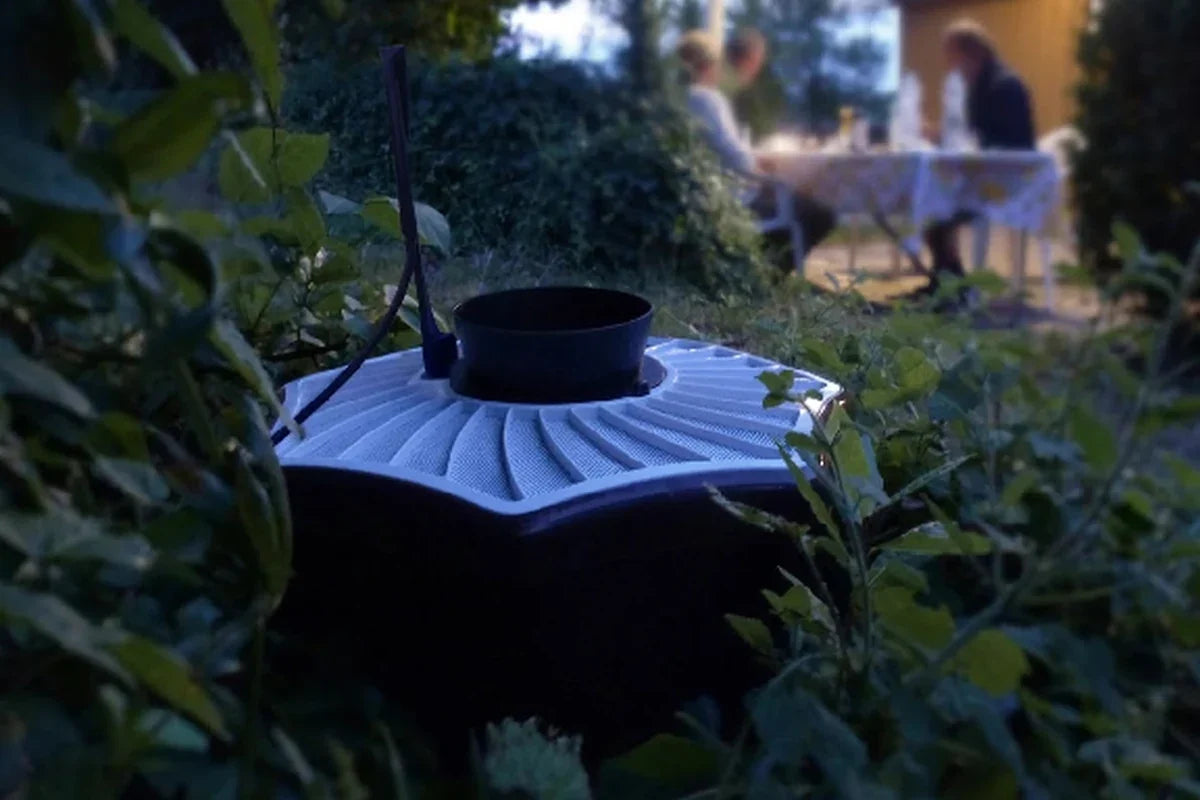
One thing about placement, since it's the difference between a trap working and not. Put it in the damp shaded planting where mosquitoes rest during the day, sheltered from wind and sprinklers, and at least fifteen feet from where you sit. Leave it running through the season rather than switching it on for the evening. You can see the full range of traps if you're working out which one fits your yard.
As for what to expect, none of this clears your yard in a weekend. You're reducing the population over weeks, so judge it by whether you're getting bitten less this month than last, rather than by any single evening. And go back out after heavy rain, because everything you emptied last week will have refilled.
Frequently asked questions
Why Does a Natural Repellent Wear Off Faster on Some Evenings?
Mostly it's heat and sweat. The hotter you are and the more you're moving, the faster it comes off, and swimming or toweling down takes most of it with it. The concentration plays a part as well, since anything under 10% active ingredient is giving you an hour or two at best. Go by the reapplication interval on the label rather than by how long it lasted the last time you used it.
What Should I Do if Mosquitoes Bite During the Day?
Daytime biting usually (but not necessarily always) means tiger mosquitoes, which are the black-and-white striped ones that are active in full daylight rather than at dusk. They breed in small containers close to the house, so check the saucers, the gutters and anything holding water within a few yards of where you're being bitten. They're also the species a GAT is built for, since they're the ones laying in containers.
Why Can a Trap Catch Fewer Mosquitoes After Yard Changes?
Because the spot might not have the same conditions anymore. Cutting back a hedge, taking down a tree or changing where the sprinklers reach can turn a sheltered shady corner into an exposed one. New planting does the opposite, growing in around the trap until it's stifling the airflow or blocking the approach. New standing water elsewhere in the yard does it too, since the mosquitoes now have somewhere better to be. Look at what changed first, then move the trap to somewhere that still meets the original conditions.
Which Trap Should I Choose for My Main Mosquito Problem?
If you're being bitten while you're outside, you want a Mosquitaire, since it imitates a person and catches the mosquitoes hunting you. If you've got standing water you can't get rid of and you want fewer mosquitoes next month, add a GAT, which imitates the water they lay in. Most people who have both find the two work better together than either does alone.
Share:
Tick Bite vs Mosquito Bite: Signs, Timing, and Next Steps
Tick Bite vs Mosquito Bite: Signs, Timing, and Next Steps