
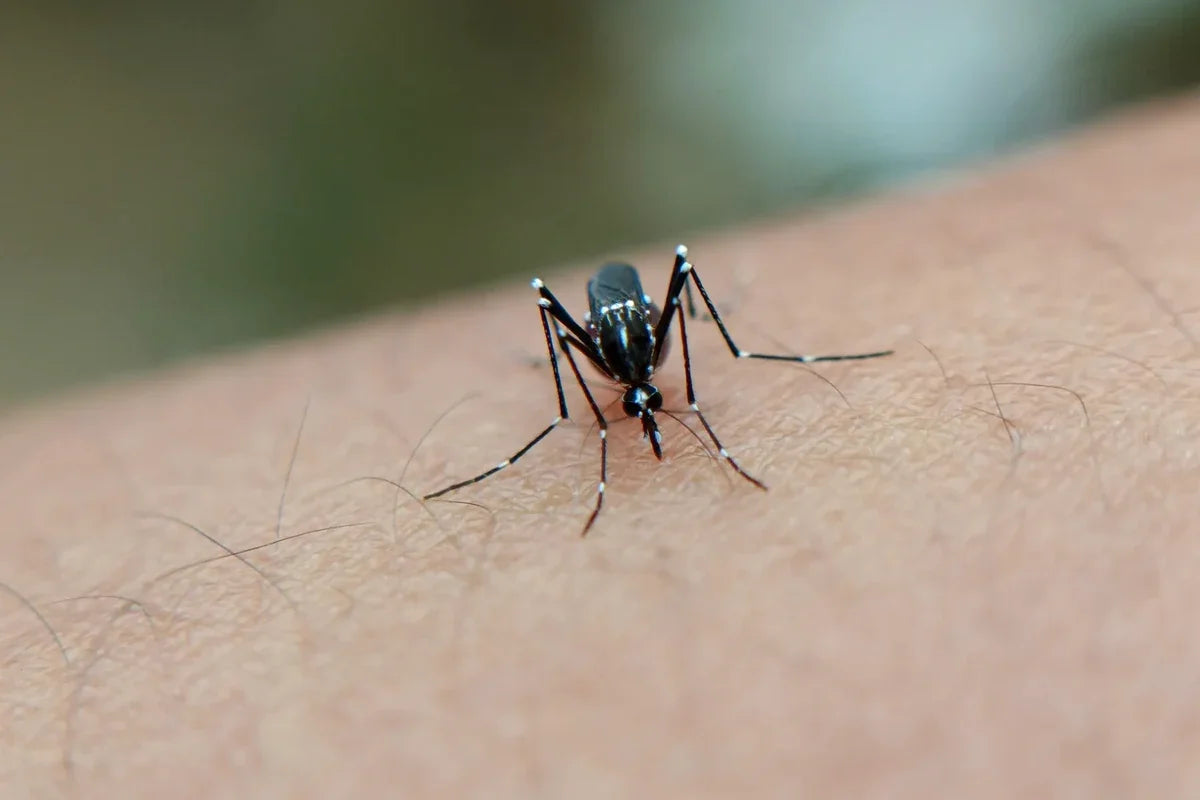
A mosquito bites you, feeds for a minute or two, and is gone before you notice. A tick climbs on, buries its mouthparts in your skin, and stays there for days.
So if there's an insect still attached to the mark, you have a tick, and getting it off properly matters more than anything you do to the skin afterwards. Finding nothing attached is less conclusive than it looks, though. Ticks drop off by themselves once they've fed, and plenty of people never notice one at all, so an ordinary-looking welt doesn't rule a tick out. What you're watching for after that is what the mark does over the following days and weeks.
Key Differences Between Tick and Mosquito Bites
A mosquito pierces your skin with needle-like mouthparts and injects saliva, and your body reacts to the proteins in it. You'll get a puffy, reddish bump within minutes, and about a day later it can harden into a firm, reddish-brown lump that itches badly.
Ticks feed quite differently. A feeding tick releases a numbing agent into the skin, which is why most people never feel it happen. The mark it leaves is often just a small bump or a patch of mild redness that looks like a mosquito bite and fades within a day or two. That early reaction tells you nothing about whether you've caught anything.
The real difference shows up over the following weeks. If the tick was carrying Lyme disease, you may develop an erythema migrans rash, typically 3 to 30 days after being bitten by an infected blacklegged tick, which is the small dark tick also called the deer tick.
People expect a bullseye, and that expectation causes problems. Only about a third of these rashes have the classic ring with a clear centre, and the rest are a solid red patch or have a darker middle. It also doesn't always appear where the tick bit you, so a spreading red patch anywhere on your body counts. What marks it out is that it expands over days, can reach 12 inches across or more, and is usually neither itchy nor painful, which is exactly why people ignore it.

How to Handle an Unidentified Bite
If you've found a mark and you're not sure what left it, work through these in order. The first two matter most, and the rest are about giving yourself something to compare against later.
- Look for the tick. Under a bright light, check the warm, hidden places first, which is where they tend to attach. That means armpits, behind the knees, the groin, around the waistband, behind the ears, and through your hair.
- Get it off straight away. Use clean, fine-tipped tweezers and grip the tick as close to your skin as you can, by the head rather than the body. Pull straight upward with steady, even pressure. Don't twist and don't jerk, because that's what leaves mouthparts behind.
- Wash the area. Clean the bite thoroughly with soap and warm water once the tick is off, and wash your hands as well.
- Photograph it with something for scale. Put a coin or a ruler next to the mark and take a clear picture, then write down the date and exactly where on your body it is. If a rash does start spreading, that photo is what tells you how fast.
- Use a cold compress and leave it alone. A cold pack takes the swelling down. Try not to scratch, because broken skin lets bacteria in.
Speed matters, because the longer a tick stays attached, the higher the risk of it passing something on. Whatever you do, don't crush it, twist it, burn it, or smother it in petroleum jelly. Those all make it more likely to regurgitate into the bite, which is the opposite of what you want. If the mouthparts break off and stay in the skin, lift them out with clean tweezers if you can reach them easily, and otherwise leave them to work their way out.

When to Seek Medical Evaluation
A mosquito welt fades within three to five days with nothing more than soap, a cold compress, and leaving it alone. Scratching is what turns one into a problem, since broken skin lets bacteria in. Call a doctor if the redness is getting worse, the area feels hot, a red streak is spreading away from the bite, or it starts weeping pus.
Ticks are different, because the thing you're watching for comes later. See a doctor if you develop a spreading red patch, joint aches, fever, chills, headache, or heavy fatigue at any point in the four weeks after a bite, and tell them you were bitten and when. Those symptoms can turn up with no rash at all, so don't wait for one before calling.
Caught early, tickborne illness responds well to antibiotics. Tell the doctor the date you were bitten, because it changes what they test for and how soon.

Assessing Your Yard and Outdoor Habits
Where you've been tells you a lot. Ticks stay low and damp, waiting on tall grass, low shrubs, and leaf litter along the edges of woodland, and they climb on as you brush past. If the bites showed up after your dog came back from the brush, read flea bites vs. mosquito bites alongside this, since dogs bring both home. If the bites ring your ankles or waistband after a walk through long grass, compare them with chigger bites vs mosquito bites as well. Bites that turn up overnight indoors are a different question, which our guide to bed bug bites vs mosquito bites covers.
Mosquitoes need standing water to breed and shaded planting to rest in during the day, and they're at their worst around dusk and dawn. Emptying plant saucers, gutters, and buckets takes away the nursery.
For the adults already flying, a trap catches biting mosquitoes without fogging anything. A BG-Mosquitaire imitates the warmth and scent of a person, so put it in the damp shaded planting out of the wind, and away from where you sit, so it intercepts mosquitoes before they reach you.
If you're being bitten at dusk or after heavy rain, those species hunt by carbon dioxide rather than scent, and a CO2 trap is the upgrade that reaches them. You can compare the full range if you're not sure which you're dealing with.

Frequently asked questions
Can a Photo Confirm Whether a Bite Came From a Tick or Mosquito?
No. The two look similar enough that a picture won't settle it. What a photo does do is give you a baseline, so when you look again in a week you can tell whether the mark has stayed the same size or spread. That's the change a doctor needs to know about.
Do Bites That Appear After Sleeping Always Come From Mosquitoes?
No. Mosquitoes do come indoors, but so do other things. Check the mattress seams and frame joints for bed bugs, and check the pets if the bites are low down on your legs. And if you were in long grass the day before, a tick can attach while you're asleep just as easily.
Will a Mosquito Trap Help With an Attached Tick?
No. A trap catches flying mosquitoes and does nothing about a tick that's already on you. Get it off with fine-tipped tweezers, then check the rest of your body and your clothes, since they rarely arrive one at a time.
What Should I Check When Mosquito Activity Stays High Near a Patio?
Before you change traps, check how the one you have is set up. It should be in shade, in damp planted cover, out of the wind, and at a distance from where you sit rather than next to it. It also needs to run continuously through the season, because switching it on for an evening does nothing to the population. If it's ticking all those boxes and you're still being bitten at dusk, the species you have probably hunt by carbon dioxide, and that's a setup change rather than a product fault.
Share:
Natural Mosquito Remedies: What Works in Your Yard
Natural Mosquito Remedies: What Works in Your Yard