
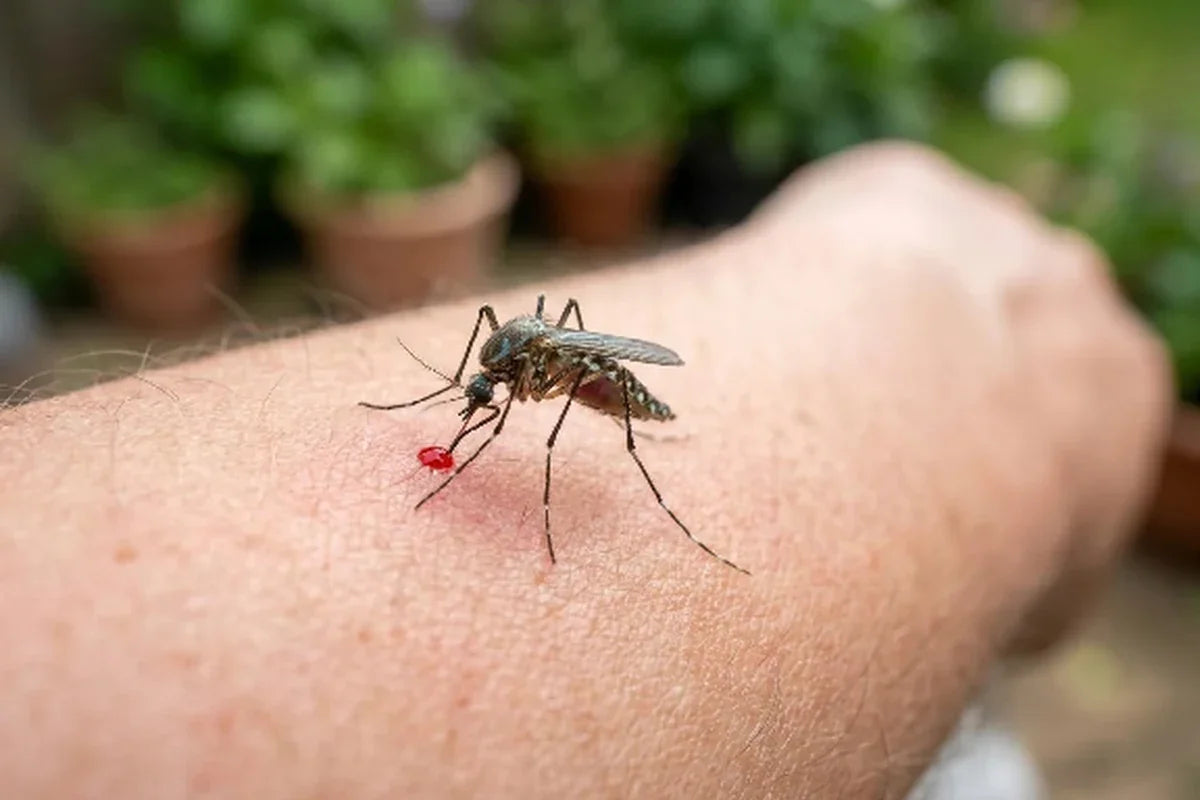
Yes, and often they look identical. That's not a coincidence or a quirk of your skin, it's what you'd expect once you know what the bump actually is.
Neither insect leaves a mark on you directly. What you're looking at is your own immune system reacting to the saliva the insect injects while it feeds, and your body reacts in much the same way to both. So the bump tells you about you, not about the insect that bit you.
This is why comparing your skin against photos online so rarely settles anything, and why two people who slept in the same bed can wake up looking completely different. Below we'll go through why the reaction varies so much, what patterns can still tell you something, and how to find the evidence that does give you an answer.
Why Both Bites Produce Identical Skin Welts
When either insect pierces your skin, it injects saliva to stop your blood clotting while it feeds. Your immune system doesn't recognise the proteins in that saliva, so it releases histamine into the surrounding tissue. Histamine widens the capillaries (small blood vessels just under the skin), and that's what produces the raised, itchy bump you end up scratching.
That's also why the bump can't identify the insect. It's a record of how your immune system responded, and everyone's responds differently. Two people can sleep in the same bed on the same night, and one wakes up covered in welts while the other has nothing at all to show.
The same variation runs across age, previous exposure, and how often you've been bitten before. Someone bitten by bed bugs for the first time often reacts more slowly than someone who's been bitten for weeks. If you want the timing differences laid out properly, our guide to bed bug bites vs mosquito bites covers what to log and when marks tend to appear.
Not every itchy red mark is a bite at all. Contact dermatitis, which is a reaction to something your skin touched, can raise similar patches, and so can a general allergic flare-up. If marks keep appearing with no insect anywhere and no puncture point, compare them against hives vs mosquito bites before you start treating for a pest.

Physical Differences in Marks, Timing, and Distribution
A single bite here and there can look similar. While more bites are unfortunately unpleasant, you'll start to find clues as to the culprit, since distinct patterns often emerge across larger groups of welts.
Bed bug bites often turn up in a tight cluster, or in a neat line of three or four marks. That line happens when the insect is feeding, you shift in your sleep, and it moves a little along your skin before starting again. The marks concentrate wherever your skin was uncovered in bed, which is usually your shoulders, neck, arms, and ankles.
Mosquito bites tend to be scattered instead. You'll usually see separate bumps with no pattern between them, appearing within minutes, wherever your skin was bare at the time. Mosquitoes will happily follow you indoors, so waking up with bites doesn't rule them out. Some people find that a bite firms up into a reddish-brown lump the next day, or comes up as a small blister, which is normal.
Other biting insects leave their own patterns. Bites gathered tightly around your sock line and lower calves are a flea signature, and flea bites vs. mosquito bites goes through what to check on your pets. Ticks are easier still, since they stay attached while they feed, so if you find the insect itself on your skin you already have your answer. If you see a red ring spreading outward from a bite instead, read tick bites vs. mosquito bites before you treat it as a mosquito.

Three Steps to Investigate Unexplained Bites
Waking up with bites and no idea what caused them is unsettling, so go through these in order rather than guessing.
- Think back over the last two days. Write down where you've been, whether that's an evening in the yard, a barbecue after dark, or a night in a hotel. If the bites started itching straight after you were outside, mosquitoes are the likely answer. If you keep finding them after a night's sleep, look indoors instead.
- Search the bed itself. Pull the sheets right back and run a bright flashlight along the mattress piping, the tags, the frame joints, and the crevices where the baseboard meets the floor. You're looking for live insects, which are flat and brown, along with shed nymph skins and tiny black spots of droppings on the fabric. Finding the insects themselves is the only way to confirm bed bugs, which is why this step matters more than anything on your skin.
- Look after the skin while you work it out. Wash the bites gently with mild soap and warm water, then use a cold compress or an anti-itch cream such as hydrocortisone to take the swelling down. Try not to scratch, however much you want to, because broken skin lets bacteria in.
When to Seek Professional Medical or Pest Support
Keep an eye on the bites over the next few days. An ordinary reaction from either insect should settle down within five to seven days, so a bite that's still getting worse after that has probably become infected.
Call a doctor if the redness starts spreading, the area feels hot, you can see red streaks running away from the bite, or it starts weeping pus. Those are signs the skin has become infected. Go straight to emergency care instead if you have trouble breathing, your throat feels tight, you develop a fever, or your face swells badly, because those point to a serious allergic reaction.
If you keep waking up to new bites but your search of the bed turns up nothing, bring in a licensed pest control specialist. They have tools you don't, including trained detection dogs and crack-and-crevice equipment, and they'll find the hiding places inside furniture and walls before the problem spreads further through the house.
What to Do About the Mosquito Side
If your search of the bed turns up nothing and the bites keep arriving after time outdoors, you're dealing with mosquitoes, and that's a different job.
Start with standing water, because that's where they breed. Walk the yard and tip out anything holding rain, including plant saucers, buckets, and blocked gutters. Then find the places they rest during the day, which are the damp, shaded, planted corners under shrubs, along a hedge, or beneath a deck. Those pockets are the hotspots in your yard.
That's where a trap belongs. A Mosquitaire mosquito trap works by imitating a person. A low-power fan pushes air upward the way body heat rises off your skin, and a Sweetscent lure adds the smell of human skin, so mosquitoes come looking for you and find the trap instead. They get pulled through the funnel into a catch bag before they ever reach you. That imitation came out of mosquito research rather than product design. Biogents built their first traps for scientists who needed to catch mosquitoes alive to study them, which meant working out exactly what draws one to a person. The traps sold for yards use the same findings.
Site it in one of those shaded hotspots and keep it at least fifteen feet from where you actually sit. You can see the full range of mosquito traps if you're not sure which setup fits your yard.
None of this touches a bed bug problem, and it isn't meant to. Once you've identified which insect you're dealing with, you can stop treating both and put the effort where it actually works.

Frequently asked questions
Can Bed Bug Bites Appear in Random Spots?
Yes. A neat line or tight cluster is common, but plenty of people get marks scattered with no pattern at all, depending on how the insect fed and how much you moved in your sleep. Treat a line as a hint that should send you searching the bed, not as proof, and treat scattered marks as no evidence either way.
Can Bed Bug Marks Appear Days After a Hotel Stay?
Yes, and this catches people out after travel. Marks can take anywhere from a day to two weeks to show, so bites you notice at home may well date back to a hotel room. If you suspect that's what happened, check your luggage and the clothes you brought back before you start searching your own bedroom.
Does an Unaffected Sleeping Partner Rule Out Bed Bugs?
No, and this is one of the most common reasons people rule bed bugs out when they shouldn't. Two people can be bitten the same number of times on the same night and only one of them comes up in welts, because the reaction is down to your immune system rather than the insect. Search the bed itself rather than comparing skin.
Can a Mosquito Bite Cause a Blister or Dark Mark?
Yes. Some people get small blisters, and some get dark marks that look like bruises, and both are normal reactions rather than a sign of anything worse. An unusual-looking mark doesn't tell you which insect caused it, so go back to where you were and what you find in the bed.
Share:
Flea vs Mosquito Bite: Key Differences and What to Check
Flea vs Mosquito Bite: Key Differences and What to Check