
Fleas and mosquitoes bite you in noticeably different places, and that's the quickest way to tell them apart. Flea bites cluster low down, usually on your ankles and lower legs, often three or four close together. Mosquito bites turn up as separate puffy bumps scattered over whatever skin was bare at the time.
The reason is how each insect reaches you. Fleas crawl up from the floor, the carpet, or the dog's bed, so they bite the first skin they meet. Mosquitoes fly, so nothing is out of reach. That tells you where to look, which is your pets and carpets for fleas, and standing water and shaded planting for mosquitoes.
Distinguishing Bite Appearance and Physical Patterns
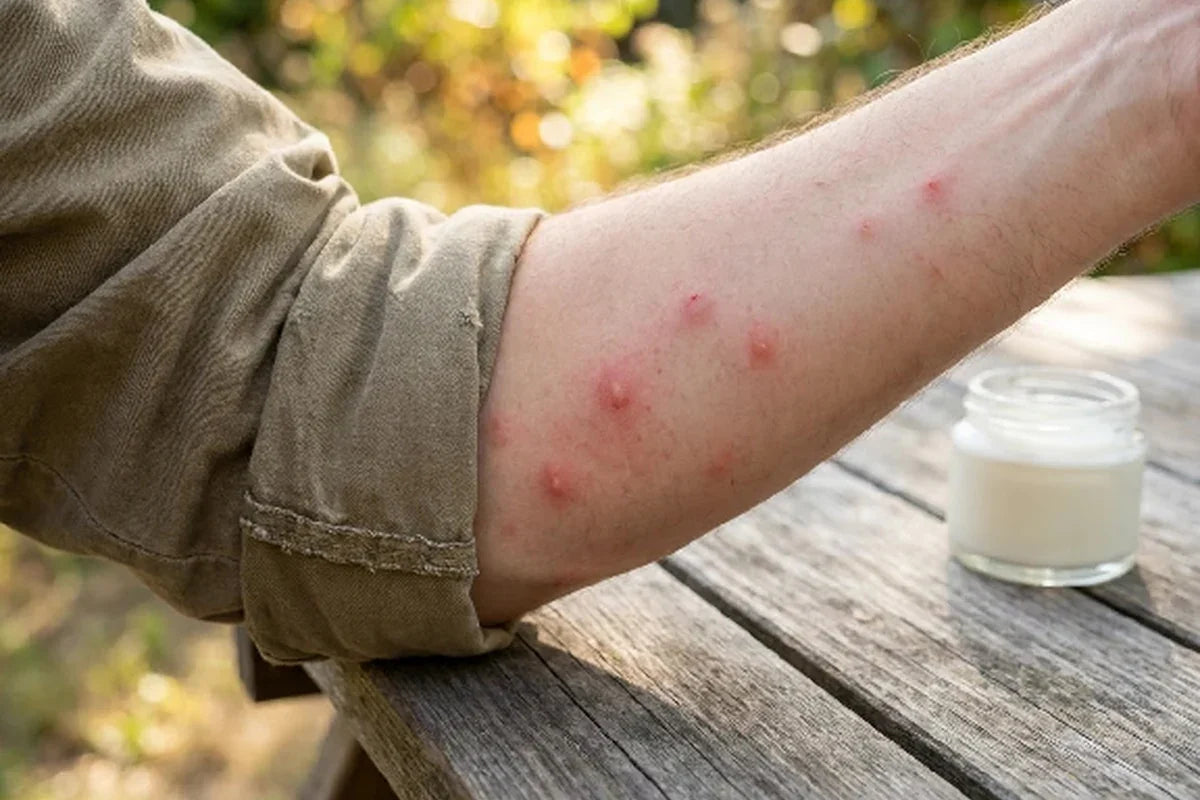
Flea bites are small, very itchy red bumps, and most have a visible puncture point in the middle. They cluster in groups of three often enough that people call it a signature, though it isn't a reliable one on its own. You'll usually find them on ankles, calves, or along the line of a tight waistband.
A mosquito bite behaves differently. It comes up as a soft, puffy swelling within minutes of being bitten, and over the next day it can firm into a reddish-brown bump. Rather than clustering, the bites scatter across arms, shoulders, neck, and bare legs.
If welts keep appearing with no puncture mark and no insect anywhere, compare them against hives versus mosquito bites. And if the marks sit along a sock line or waistband after time in long grass, read chigger bites versus mosquito bites, since chiggers favour exactly those spots.
One thing to keep in mind. If you have pets, fleas move up the list, because a dog or cat is how they usually get into a house in the first place. That doesn't rule out bed bugs, and it doesn't make fleas the answer. It just changes what's likely enough to check first.
It works the other way too. Fleas can arrive without any pet at all, carried in on clothing, left behind by a previous tenant, or coming in from wildlife under the house. And if they've got into a couch or a bed, they'll bite wherever you're resting against the fabric, so you'll see clusters on your arms, back, or waist rather than your ankles. That pattern looks a lot like bed bugs.
Close-up of several red insect bites on a lower leg
Where Each Insect Actually Lives
There's one difference that settles a lot of cases. Fleas live and breed indoors, in carpets, upholstery, and pet bedding, so an infestation stays and grows. Mosquitoes come indoors through an open door and bite you, but they won't set up in your carpets. So if the bites keep coming night after night with nothing changing, that points indoors at something living there, whether that's fleas or bed bug bites versus mosquito bites. If they only follow time spent outside, look outside, and read tick bites versus mosquito bites if you've been in long grass or brush.

Four Steps to Treat Bites and Confirm the Pest
Work through these four in order, since the first two stop the itch getting worse and the second two tell you which insect you're dealing with.
- Wash the bites with mild soap and cool water as soon as you notice them.
- Take the itch down. Hold a cold pack on for ten minutes, then use an over-the-counter hydrocortisone cream. The point is to stop you scratching, since broken skin is what turns a bite into an infection.
- Comb your pets. Use a fine-toothed flea comb around the neck and the base of the tail, and look for fleas themselves or for flea dirt, which is flea droppings and looks like specks of black grit. Tip the specks onto damp white paper. If they smear reddish-brown, that's digested blood, and you have fleas.
- Walk the yard. Tip out standing water from saucers, buckets, and gutters, then check the damp shaded planting where mosquitoes rest during the day. Finding them sitting there tells you the yard is the source.
Controlling the Source in Your Yard and Home
If it turns out to be fleas, the treatment is all indoors and none of it is optional. Wash the pet bedding on a hot cycle, vacuum the carpets and upholstery thoroughly and often, and get a proper flea treatment from your vet for the animal itself. Skip any one of those and the infestation comes back, because the eggs are already in the carpet.
If it's mosquitoes, the work is outdoors and it comes in two halves. Get rid of the standing water so they can't breed, then trap the adults that are already flying.
For the trapping, placement matters more than which model you buy. A Mosquitaire trap imitates the warmth and scent of a person, so site it in the damp shaded planting near your boundary and leave it running, and it'll pull biting mosquitoes away from your patio rather than toward it.
Which setup you add depends on what you're dealing with. If mosquitoes are biting you in daylight, the Mosquitaire on its own handles the species responsible. If you're being bitten at dusk or after heavy rain, those species hunt by carbon dioxide instead, so a CO2 trap is the upgrade that makes the difference. And a passive GAT trap works on a different part of the problem, catching mosquitoes that are looking for water to lay eggs in. You can see how they compare across the mosquito traps range.

Recognizing When to Seek Medical Attention
Most bites settle on their own within a few days with nothing more than soap, a cold pack, and not scratching them.
Call a doctor if a bite looks like it's turning into an infection, which means redness spreading outward, the area feeling hot, or red streaks running away from it. Go straight to emergency care instead if you develop a fever, break out in hives, or have any difficulty breathing, because that's a severe allergic reaction rather than an infected bite.
Frequently asked questions
Does a Cluster of Three Bites Prove They Came From Fleas?
No. Three bumps close together is a useful clue, and it's common enough with fleas that you should take note, but it can't confirm anything by itself. Reactions vary from person to person, and other insects leave similar groupings. Comb the pets and check the carpets, because that's what settles it.
Can Flea Bites Spread Illness?
Rarely, but yes. Some fleas in the United States carry the bacteria that cause <a href="https://www.cdc.gov/fleas/about/index.html">plague and murine typhus</a>, though both are uncommon. Cat scratch disease works differently, since it usually reaches people through the scratch of a cat carrying infected fleas rather than through a flea bite itself. None of this is a reason to panic about an itchy ankle, but it is a reason to treat the pets and the carpets rather than living with it.
Can a Mosquito Bite Transmit Disease?
Yes, some can. Infected mosquitoes spread West Nile, dengue, Zika, and malaria, though which of those is a real risk depends entirely on where you live and which species are biting. In most of the United States the everyday concern is West Nile, and the practical answer is the same either way, which is fewer mosquitoes around the places you spend time.
Will Treating My Pet Fix the Problem on Its Own?
No, and this is where most flea treatments fail. The adults on the animal are a small part of the population, while the eggs, larvae, and pupae are down in your carpets, rugs, and pet bedding. Treating the pet without treating the house means you're killing the fleas you can see and leaving the rest to hatch.<br><br>You'll need a targeted flea regime that covers the animal, the soft furnishings, and the floors at the same time. Your vet is the best place to start, since they can tell you what to use on each. Keep vacuuming for several weeks afterwards, because pupae can sit dormant and hatch long after you think you've finished.
Share:
Do Bed Bug Bites Look Like Mosquito Bites?
Do Bed Bug Bites Look Like Mosquito Bites?