
Chigger bites stop at your clothing. That's the tell, and it's a strange one to see the first time. You'll find a band of itchy bumps that runs along a sock line, a waistband, or a bra strap and then stops dead where the fabric was tight.
Mosquito bites do the opposite. They turn up on whatever skin was bare, they come up within minutes, and they're scattered rather than gathered in a line. A chigger bite doesn't itch at all to begin with, and then starts itching hard several hours later, usually once you're back indoors and have stopped thinking about where you've been.
Comparing Itch Timing and Bite Appearance
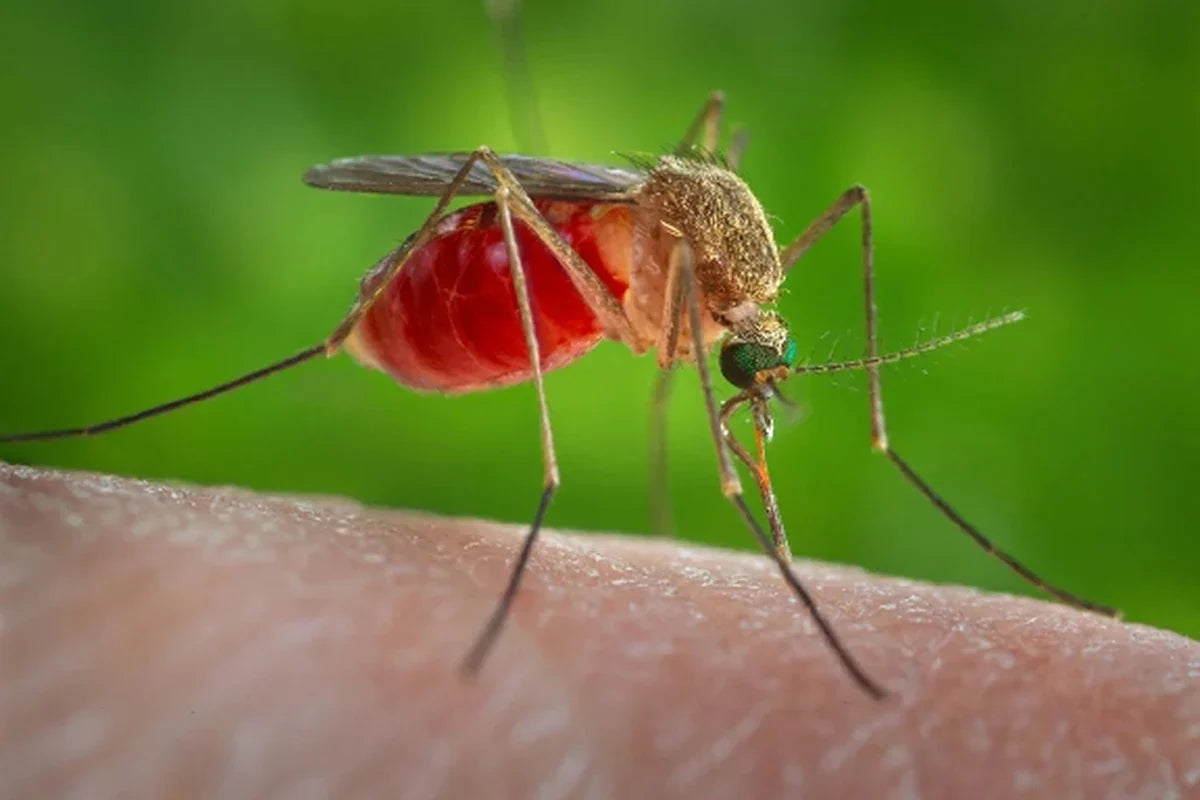
A female mosquito pierces your skin with a proboscis (the needle-like mouthpart) and injects saliva while feeding. Your immune system reacts to the proteins in that saliva, and that reaction is the bump you end up with.
That shows up as a puffy, reddish bump within minutes, and over the next day it often hardens into a reddish-brown lump that itches. Some people get small blisters or dark bruise-like marks instead.
Chiggers work in a completely different way. Chigger larvae are tiny six-legged mites, barely visible, and they live in tall grass, weeds, berry patches, and the edges of woodland through summer and fall.
You won't feel a chigger attach. It anchors at a pore or hair follicle and injects an enzyme that dissolves skin cells, then feeds on the liquid that produces. Your skin hardens around the feeding site into a narrow tube called a stylostome, and it's your reaction to that tube and the enzyme, rather than the bite itself, that produces the itch. That's why it starts hours later and goes on for days.
Two things people get wrong follow from this. Chiggers don't burrow into you and they don't drink blood, so there's nothing under the welt to smother. And by the time you're itching, the mite has usually been scratched or washed off already. That makes nail polish, bleach, and alcohol useless as well as unpleasant, since the stylostome is still there either way and only time clears it.
Reactions vary a lot between people, so the look of a bump won't settle it by itself. If welts are appearing all over with no obvious insect contact and no puncture mark, read hives vs mosquito bites before assuming you've been bitten at all.

Using Body Location as a Diagnostic Clue
Where the bites sit tells you most of what you need. Mosquitoes fly, so they reach whatever skin was uncovered, which is usually arms, legs, neck, and face.
Chiggers can't fly. They crawl onto your shoes or trouser legs from the vegetation you brushed past, then work upward until something stops them. That's usually a sock elastic, a waistband, or a bra strap, which is why the bites gather at those lines and in warm skin folds. Chigger bites rarely turn up on open, uncovered skin at all.
A band of itchy bumps that stops dead at an elastic line is about as close to a positive identification as you get without seeing the mite. Pair that with a walk through long grass in the last day or so and you have your answer.
Other pests cluster too, which is where it gets confusing. Bites gathered on your lower legs after time with the dog are more likely fleas, and flea bites vs mosquito bites covers what to check on the animal. If the clusters appeared overnight and you haven't been anywhere near long grass, read bed bug bites vs mosquito bites instead.

Step-by-Step Care for Uncomplicated Bites
The aim here is to take the itch down and keep the skin intact while it heals. Work through these in order.
- Wash thoroughly, and do it soon. Soap and warm water, and scrub rather than rinse. If you've been in long grass, a shower with a washcloth knocks off any chiggers still attached before they've finished feeding, and that's the one thing that shortens the itch.
- Cool it down. An ice pack wrapped in a clean cloth, ten minutes at a time, takes the swelling and the worst of the itch down.
- Use an anti-itch cream. An over-the-counter hydrocortisone or antihistamine cream, used as the label says, will handle most bites of either kind.
- Step it up if it's keeping you awake. An oral antihistamine or a stronger corticosteroid cream is the next move if the itching is stopping you sleeping or you can't stop scratching.
Scratching is the thing that causes real trouble, because broken skin lets bacteria in. Over the next few days, if the redness starts spreading, the area feels hot, or a red streak runs away from a bite, that's an infection and it needs a doctor rather than more cream.
a cold compress, clean water and some anti-itch cream to treat a mosquito bite
Recognizing Pathogen Risks and Complications
Here the two are not comparable, and the news is good on the chigger side. In North America chigger bites itch horribly and do nothing else. They don't carry disease, and you won't need antibiotics unless you've scratched one open and it's become infected.
That changes if you've been travelling. In parts of the Asia-Pacific region, chigger larvae can carry scrub typhus. It usually starts at least a week after exposure with a high fever, headache, and muscle aches, often with an eschar (a dark scab-like mark) at the spot where the mite fed.
Mosquitoes are the bigger disease risk of the two, and across far more of the world. Depending on where you live and which species are biting, they can carry West Nile virus, dengue, Zika, chikungunya, or malaria. In most of the United States the one to know about is West Nile.
One thing to rule out. If you find something actually attached to your skin rather than a bump, that isn't a chigger, since they're too small to see easily and they don't stay put. Read tick bites vs mosquito bites, because a tick needs removing properly and the sooner the better.
Preventing Future Bites in Your Yard
Chiggers and mosquitoes need completely different handling, because they live in different places and reach you in different ways. Nothing you do for one will help with the other.
For chiggers, it's clothing and mowing. Keep the grass down, cut back overgrown path edges, and don't sit straight down in leaf litter. Before you walk through brush, tuck your trouser legs into your socks or boots, since chiggers have to climb from ground level to reach you. A shower afterwards, with a washcloth, does the rest.
A mosquito trap will do nothing for chiggers, and it's better to say so plainly. Chiggers crawl along the ground and don't follow scent or carbon dioxide through the air, so there's nothing for a trap to catch.

For mosquitoes, start with water. Empty plant saucers, buckets, and gutters weekly, because that's where the next generation is coming from.
Then deal with the adults. A Mosquitaire imitates the warmth and scent of a person, so put it in damp, sheltered planting and keep it away from where you sit, so it intercepts mosquitoes on the way in. Pair it with a GAT if you want to catch the ones hunting for water to lay eggs in, which works on the next generation rather than this one.
If you're bitten at dusk or after heavy rain, those species hunt by carbon dioxide rather than scent, and a CO2 trap is what reaches them. You can compare the full range if you're not sure which you need.
Frequently asked questions
When Should I Seek Medical Care for a Bite Reaction?
Go straight to emergency care if you have any difficulty breathing or severe swelling, since that's an allergic reaction rather than an ordinary bite. Otherwise call a doctor if a bite is spreading, getting hotter, growing a red streak, or simply not improving after several days.
Can a Mosquito Trap Replace Standing-Water Removal?
No, and the two aren't doing the same job. A trap catches the adults that are already flying. Emptying standing water stops the next lot developing in the first place. Do both, because a trap can't keep up with a yard that's breeding new mosquitoes every week.
What if Bites Continue After Mosquito Prevention?
Check what's actually biting you before you buy anything else. If the bumps are turning up in a line at your sock elastic or waistband after time in long grass, that's chiggers, and no amount of trapping will touch them. That's a job for tucked-in trousers, a mown lawn, and a shower when you come in.
What Symptoms Need Attention After Chigger Exposure Abroad?
If you've been bitten by chiggers in parts of the Asia-Pacific region, see a doctor for fever, headache, or muscle aches, and mention where you were. The same goes for a dark scab-like mark appearing at a bite site about a week later, since that's the sign that points to scrub typhus.
Share:
Natural Mosquito Killer: Traps, Bti, and Yard Control
Natural Mosquito Killer: Traps, Bti, and Yard Control